
8 Automations for Bathrooms: Mirror, Vent, Heater, Light
Ever walked into a bathroom and the mirror fogs up the moment you turn on the shower? Or maybe you’ve fumbled in the dark for the light switch after a late-night trip?
Modern technology offers solutions to these everyday frustrations. This post explores 8 Automations for Bathrooms, transforming a simple space into a smart, efficient, and comfortable environment.
You’ll gain insights into making your bathroom a more convenient and pleasant place to be, significantly improving your experience and making the most out of your existing space.
Key Takeaways
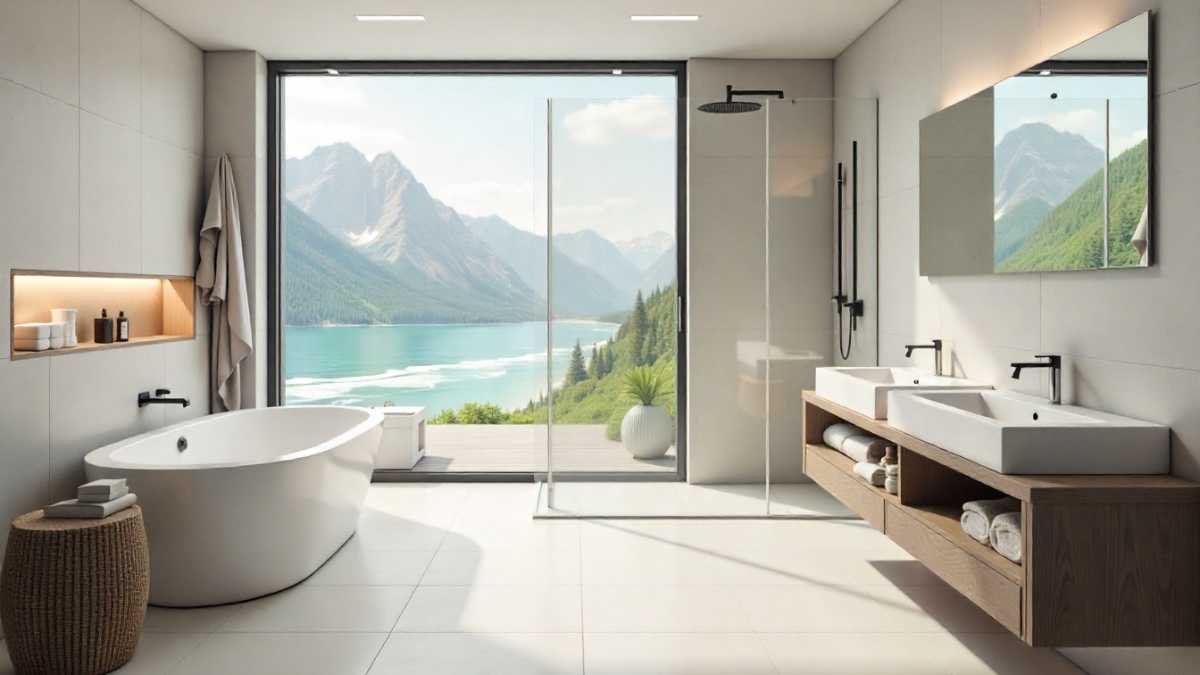
The 10 Smart Bathroom Enhancements
A smart bathroom is more than just a luxury; it’s a way to enhance comfort, save energy, and improve safety.
This list details 10 different ways you can automate various aspects of your bathroom. These range from simple, affordable upgrades to more advanced setups.
You will find examples of each automation, from smart mirrors to automated ventilation systems. Implementing these automations doesn’t require a complete overhaul; many can be integrated gradually as your budget allows.
This exploration will provide the knowledge you need to transform your bathroom into a modern, user-friendly space.
1. Automated Defogging for Mirrors
Foggy mirrors are a common bathroom inconvenience. Automated defogging systems eliminate this issue.
These systems use heated mirror pads or integrated heating elements to keep the mirror surface clear, regardless of the humidity in the room.
This ensures that you have a clear reflection immediately after a shower, saving time and frustration.
Defogging systems work by slightly raising the temperature of the mirror surface, preventing condensation from forming.
This is different from a heated towel rack, as the energy is focused specifically on the mirror surface.
The defogging system activates automatically when the bathroom humidity reaches a certain level, usually triggered by the presence of moisture from a shower.
How it Works
- Heated Mirror Pads: These are thin, adhesive pads that attach to the back of the mirror. They warm the surface and prevent fogging.
Heated mirror pads are often the most straightforward solution for adding defogging capabilities. They’re typically easy to install, often involving a simple adhesive application to the back of the mirror.
They connect to a power source, usually a 120V outlet, and the heat produced warms the glass enough to prevent condensation. This is an efficient approach, directly addressing the problem area.
- Integrated Heating Elements: Some mirrors come with built-in heating elements, providing a sleek and seamless defogging solution.
These mirrors are designed with defogging technology integrated into their construction. This eliminates the need for any additional components attached to the back of the mirror.
The heating elements are usually hidden from view, contributing to a clean and modern aesthetic. They often incorporate touch controls on the mirror surface or integrate with a smart home system, offering convenient control.
- Humidity Sensors: A humidity sensor can detect when the humidity in the bathroom increases, turning the defogging system on automatically.
Humidity sensors play a vital role in automating defogging. By detecting when the humidity levels rise due to the shower or bath, these sensors can trigger the defogging system to activate.
This makes the system more efficient, activating only when needed. It ensures the mirror is clear when you need it most, such as immediately after a shower. These sensors can be integrated into the mirror itself or can work as separate components.
Example: Sarah installed a smart mirror with a built-in defogger in her bathroom. The mirror automatically cleared up within seconds of her taking a shower, making her morning routine significantly more convenient.
2. Automatic Ventilation Systems
Proper ventilation is essential for preventing mold and mildew in a bathroom, and automation takes this function to the next level.
Automatic ventilation systems typically use humidity sensors to detect when moisture levels rise above a specific threshold. When triggered, the exhaust fan turns on, removing excess humidity and odors from the bathroom.
This prevents damage to walls and fixtures caused by moisture, while also improving indoor air quality.
Moreover, some advanced systems can also be linked to occupancy sensors, activating the fan only when the bathroom is in use, optimizing energy use.
How it Works
- Humidity Sensors: These sensors constantly monitor the humidity levels in the bathroom.
Humidity sensors are the core component of an automated ventilation system. Placed within the bathroom, these devices continuously monitor moisture levels. When the humidity exceeds a pre-set level, such as the condensation produced by a shower, it triggers the exhaust fan.
- Exhaust Fan Control: The system automatically controls the exhaust fan to turn it on or off based on humidity levels.
The control unit manages the exhaust fan’s operation, turning it on and off based on the readings from the humidity sensor.
It ensures the fan runs for the necessary duration to clear excess moisture and odors, promoting healthier air and preventing the buildup of mold and mildew.
- Occupancy Sensors: Some systems integrate occupancy sensors to activate the fan only when someone is in the bathroom.
Occupancy sensors improve energy efficiency by ensuring that the ventilation system operates only when the bathroom is in use.
When the sensor detects activity, it activates the exhaust fan. If no motion is detected for a specific amount of time, the fan will automatically turn off. This is especially helpful in bathrooms that are used infrequently.
Example: John installed a smart exhaust fan. After taking a shower, the fan automatically turned on due to the increase in humidity and ran until the air dried. This significantly reduced moisture-related issues.
3. Smart Bathroom Heaters
A smart heater adds a layer of comfort to your bathroom routine. Smart heaters are not just about the convenience of having a warm space before or during a shower.
They also focus on efficiency, allowing for both cost savings and reduced energy consumption. This system lets you preheat the bathroom before you enter or set a schedule to optimize your energy use.
Smart heaters often include features like programmable timers, remote control options, and even compatibility with smart home systems, making it easy to integrate with your existing setup.
How it Works
- Programmable Thermostat: Allows you to set specific temperature preferences and schedules.
The programmable thermostat is the main control interface for a smart bathroom heater, allowing the user to create heating schedules tailored to their routines.
This is especially useful for those who use their bathroom at different times of the day, as it can be set to heat the bathroom just before they enter, such as in the morning or evening.
These thermostats can also be set to automatically lower the temperature when you are away or during the night.
- Remote Control and App Integration: Allows for control from anywhere.
Remote controls or a smartphone app offer the convenience of adjusting the heater’s settings from anywhere in the home or even remotely, adding to the user’s convenience.
Adjust the temperature, turn the unit on or off, or change the heating schedule from the comfort of a bed or when returning from work.
These apps often provide energy consumption data and allow for integrations with other smart home systems.
- Motion Sensors: Some models can detect when someone enters the bathroom and adjust the heating accordingly.
Motion sensors enhance the energy efficiency of the heater by activating only when the bathroom is occupied. This is especially helpful in homes where the bathroom is not used regularly.
When a sensor detects motion, the heater can quickly increase the temperature, providing immediate warmth.
When no activity is detected, the heater will automatically turn off or enter a lower energy mode. This function reduces energy consumption and costs.
Example: Emily programmed her smart heater to turn on 15 minutes before her morning shower. The bathroom was always perfectly warmed up when she entered, making her mornings more comfortable.
4. Smart Lighting Control
Smart lighting is one of the easiest and most impactful automations to implement in your bathroom.
This provides control over brightness and color temperature, and can be integrated with voice assistants or apps for hands-free operation.
Smart lighting offers several advantages. You can adjust the ambiance of the bathroom to create the perfect setting.
It can also improve the safety and convenience of daily routines. Smart lighting allows for customization and flexibility, making it a great addition to the modern bathroom.
How it Works
- Smart Bulbs or Fixtures: LED bulbs or fixtures that can be controlled via an app or voice commands.
Smart bulbs or integrated fixtures are the most important part of this automation, as these are the light source that is being controlled.
These often have a number of features, such as dimming, color temperature control, and scheduling options.
Smart bulbs can integrate with existing light fixtures, while smart fixtures provide a more cohesive design and can be customized during the initial bathroom renovation or remodel.
- Voice Control: Integration with voice assistants like Amazon Alexa or Google Assistant.
Voice control provides a hands-free method of controlling the lighting. This is useful when hands are occupied with other activities.
Users can adjust brightness, change color temperatures, or turn lights on and off with a simple voice command, improving convenience and user experience.
- Motion Sensors: Lights can automatically turn on when motion is detected and off after a period of inactivity.
Motion sensors add an automated and energy-efficient component to smart lighting. They detect movement and trigger lights to turn on when someone enters the bathroom.
The lights automatically turn off when movement ceases, which helps save energy and prevents the need to find the light switch in the dark. This is especially useful for night-time visits to the bathroom.
Example: Michael set up his smart lights to gradually brighten in the morning, serving as a gentle alarm. He was able to set the lights in the bathroom with voice control while getting ready.
5. Automated Water Temperature Control
Automated water temperature control provides a safer and more comfortable shower experience. This involves installing a smart valve system that allows you to pre-set water temperatures and even automatically adjust them to maintain a consistent temperature throughout your shower.
It eliminates temperature fluctuations. It also prevents scalding or chilling, enhancing both safety and convenience.
Some systems also provide real-time water usage data, helping to conserve water. Automated water temperature control is especially useful for families, as it helps prevent accidents.
How it Works
- Smart Shower Valve: Replaces the existing shower valve and connects to the water supply.
The smart shower valve, which replaces the existing manual valve, is the central component of the automation.
It connects to the hot and cold water supplies and manages the water flow and temperature. The valve allows for precise temperature control and the ability to set specific temperature preferences.
- Digital Interface: A digital panel or app to set and adjust water temperature and flow.
The digital interface, usually a control panel installed in the shower or a smartphone app, allows the user to easily set and modify the water temperature and flow.
This provides a user-friendly interface to manage all the settings, eliminating the need to guess the temperature and manually adjust the water flow.
- Temperature Sensors: These sensors continuously monitor the water temperature and adjust the valve as needed.
Built-in temperature sensors continuously track the water temperature as it flows through the system.
If any fluctuations are detected, the valve automatically adjusts the flow of hot and cold water to maintain the pre-set temperature, ensuring the water stays at a steady and comfortable level.
Example: The Miller family installed a smart shower system, and their children were safe from accidental scalding, as they could pre-set the temperature and limit its maximum level.
6. Smart Toilet Features
Smart toilets offer a range of automated functions designed to enhance hygiene, comfort, and convenience.
These features include heated seats, automatic flushing, bidet functions, and self-cleaning capabilities.
Smart toilets are a step up in bathroom automation, making your daily routines more comfortable and efficient.
They also often incorporate water-saving technologies, contributing to sustainable living. The inclusion of hygiene-focused features adds a layer of sophistication to the bathroom experience.
How it Works
- Heated Seats: Provide warmth for enhanced comfort.
Heated seats are a basic but appreciated feature. They are controlled by the system’s electronics. They are especially comfortable during colder times of the year and can be easily customized with temperature settings to suit different preferences. Heated seats provide instant comfort and can be controlled through a remote or app.
- Automatic Flushing: Toilets flush automatically after use, eliminating the need for manual operation.
Automatic flushing ensures the toilet flushes after each use, promoting hygiene and ease of use. This feature can be triggered by a motion sensor, a weight sensor, or a button.
Automated flushing minimizes contact with the toilet and makes it easier for elderly users or those with limited mobility to operate. This also reduces the chance of forgetting to flush, helping maintain cleanliness.
- Bidet Functionality: Provides cleansing with adjustable water pressure and temperature.
Integrated bidet functions deliver a high level of personal hygiene by offering adjustable water pressure and temperature controls for the cleaning process.
These functions often include features such as heated air drying. This function significantly reduces the need for toilet paper while improving hygiene and user comfort.
Example: The Smiths installed a smart toilet with a heated seat and automatic flushing. They appreciated the increased hygiene and comfort. They also found the automatic flushing very convenient.
7. Automated Soap and Hand Sanitizer Dispensers
Automated soap and hand sanitizer dispensers improve hygiene and convenience in the bathroom. These devices use motion sensors to dispense soap or sanitizer, eliminating the need to touch the dispenser and reducing the spread of germs.
This can be integrated as part of a completely automated environment or be a standalone product. This automation is particularly beneficial in high-traffic bathrooms or in households with children.
These systems can also come with adjustable dispensing amounts to reduce waste and can be refilled with your choice of soap or sanitizer.
How it Works
- Motion Sensors: Detect the presence of a hand and trigger soap or sanitizer dispensing.
The motion sensor is the key element, activating the dispenser when hands are placed near the dispensing nozzle.
This hands-free operation is designed to minimize the risk of cross-contamination, which is particularly beneficial in high-traffic bathrooms or settings such as public spaces.
- Dispensing Mechanism: Dispenses a pre-set amount of soap or sanitizer.
The dispensing mechanism accurately dispenses the correct amount of soap or sanitizer to avoid waste and guarantee effective hand hygiene. This can be customized to dispense small, medium, or large amounts of soap, making it adaptable to different needs and requirements.
- Power Source: Usually powered by batteries or an AC adapter.
The dispensers are usually powered by either batteries or an AC adapter. Battery-powered models provide flexibility in placement, while AC-powered versions offer reliable operation without having to replace batteries.
Example: The Johnsons installed automatic soap dispensers in their children’s bathroom, encouraging them to wash their hands more frequently without touching a dirty surface.
8. Voice-Activated Bathroom Features
Voice control can integrate and enhance various automated features. This technology uses voice commands to operate the bathroom’s various systems, such as lights, temperature, music, and ventilation.
This allows for hands-free control, adding a layer of convenience and accessibility to your bathroom.
Voice control can often be integrated with existing smart home systems, making it a valuable addition to modern bathrooms. It is useful for those with mobility issues or anyone who wants the convenience of spoken commands.
How it Works
- Voice Assistant: Integrates with voice assistants like Amazon Alexa or Google Assistant.
This is the core of the voice-activated system. The voice assistant processes spoken commands and interfaces with the various connected smart devices in the bathroom. This allows users to control the different features through natural language commands.
- Smart Home Hub: Connects all smart devices and the voice assistant.
A smart home hub works as a central point of control, connecting all the smart devices in the bathroom, such as lights, thermostats, and exhaust fans.
This ensures that the voice assistant can communicate and control all features seamlessly. It is usually integrated into an existing smart home system.
- Voice Commands: Users can control devices using simple voice commands.
Users can use easy voice commands to control all of the smart devices connected in their bathroom.
For example, “Alexa, turn on the bathroom lights,” or “OK Google, set the bathroom temperature to 72 degrees.” This offers a hands-free method of operation, boosting the user experience.
Example: The Parkers integrated voice control in their bathroom. They could turn on the lights, adjust the temperature, and start music playback using only their voice.
9. Smart Scales and Health Monitoring
Smart scales and health monitoring technology can be integrated into the bathroom to provide detailed health information.
These scales can measure weight, body fat percentage, muscle mass, and other metrics. This data can be automatically synced to a smartphone app, providing easy access to track your health progress over time.
Smart scales can also provide personalized insights and recommendations. These integrations offer a convenient way to monitor your health and wellness goals, contributing to a more proactive approach to health management.
How it Works
- Smart Scale: Measures weight and other body composition metrics.
A smart scale measures your weight and more, such as body fat percentage, muscle mass, and hydration levels, and can accurately track your weight over time.
This offers you a much better picture of your health than a traditional scale. Data from the scale can be automatically recorded, stored, and analyzed.
- Wireless Connectivity: Sends data wirelessly to a smartphone or other device.
Smart scales use Wi-Fi or Bluetooth to send the measurement data to your smartphone, tablet, or another device.
This feature enables you to see your data from the scale, monitor your overall health over time, and compare them with the goals you’ve set for yourself.
- Mobile App Integration: Allows users to track progress and view detailed health information.
Mobile app integration provides easy access to your health metrics, allowing you to track progress, set and manage health goals, view the health information, and analyze trends.
App integration is especially useful because it can easily be accessed by several family members or housemates.
Example: The Jones family used smart scales to track their weight and health metrics. The app provided visualizations and allowed them to set personal fitness goals.
10. Automated Shower Cleaning Systems
Automated shower cleaning systems are an advanced way to manage shower maintenance. These systems can include self-cleaning shower heads, automated cleaning cycles, and integrated cleaning solutions.
This reduces the time and effort required for cleaning. These systems contribute to a cleaner, more hygienic bathroom environment. Automated cleaning promotes a healthier living space. They make it easier to maintain a clean bathroom.
How it Works
- Self-Cleaning Shower Heads: Built-in mechanisms to prevent mineral buildup and blockages.
Self-cleaning shower heads use special nozzles designed to prevent mineral deposits from forming. They are equipped with features that automatically remove any buildup and promote continuous water flow.
These shower heads are meant to cut down on regular cleaning tasks, offering enhanced convenience and improved water performance.
- Automated Cleaning Cycles: Systems that perform cleaning functions on a scheduled basis.
Automated cleaning cycles involve a scheduled cleaning program. They dispense cleaning solutions and then rinse the shower surface.
These cycles can be programmed to run at set intervals, making it very easy to keep the shower clean, particularly in busy households. They remove the need for manual scrubbing and cleaning.
- Integrated Cleaning Solutions: Specialized cleaning products designed for the system.
Integrated cleaning solutions come in customized cleaning products that work alongside the cleaning systems.
These products use specialized formulas, optimized for the shower’s cleaning process. These solutions improve overall cleanliness, increase the efficiency of the cleaning process, and prevent any damage to the shower components.
Example: The Greens used a shower system that cleaned itself on a daily schedule. They found that it significantly reduced the time they spent cleaning the bathroom, making their lives easier.
FAQ Of 8 Automations for Bathrooms
What is the most important benefit of automating bathroom features?
A: The most significant benefit is improved convenience and comfort, along with increased energy efficiency and enhanced safety.
Are smart bathroom automations expensive?
A: The cost varies, but many automations, like smart light bulbs, are affordable. More complex systems like smart showers might be pricier.
Can I install these automations myself?
A: Many are DIY-friendly, such as smart bulbs or automated soap dispensers. Complex installations, like water temperature control, might require a professional.
How secure are smart bathroom devices?
A: Security varies by device. It is important to buy devices from trusted brands and secure your Wi-Fi network.
Will automating my bathroom increase my home’s value?
A: Yes, smart home upgrades, including bathroom automations, can increase your home’s appeal and value to potential buyers.
Final Thoughts
Transforming your bathroom with 8 Automations for Bathrooms: Mirror, Vent, Heater, Light can dramatically improve your daily routines.
From automatic defogging mirrors to voice-controlled lighting, these enhancements create a more comfortable, efficient, and safer space.
Whether you’re upgrading for convenience, energy savings, or a touch of modern luxury, the options are plentiful and accessible.
Start small, perhaps with a smart light bulb or automated soap dispenser, and gradually introduce more features as your needs and budget allow.
The result will be a bathroom that’s not just functional, but a true sanctuary in your home. Take the first step and explore how these simple changes can revolutionize your bathroom experience.

![Smart Pet Zones Automating Pet Care with Feeding and Control[1]](https://gigasecurehome.com/wp-content/uploads/2025/10/Smart_Pet_Zones__Automating_Pet_Care_with_Feeding_and_Control1-1-768x448.jpg)
![Smart Doorbell Package Detection and Alert Systems Explained[1]](https://gigasecurehome.com/wp-content/uploads/2025/10/Smart_Doorbell_Package_Detection_and_Alert_Systems_Explained1-768x448.jpg)

![How To Secure Your Home When Going On Vacation[1]](https://gigasecurehome.com/wp-content/uploads/2025/11/How_To_Secure_Your_Home_When_Going_On_Vacation1-768x448.jpg)