Power Outdoor Cameras Without Electricity?
Standing in my backyard, I look out at the vast wilderness. I worry about my family’s safety, miles from the nearest power grid. Outdoor surveillance cameras are key to home security, but they need a steady power source.
In places without electricity, powering these cameras is tough. Many homeowners face challenges, using big generators or weak batteries.
In this article, I’ll share easy and budget-friendly ways to power outdoor cameras in remote spots. This way, you can keep your property safe without spending a lot.
Key Takeaways

Understanding the Challenge of Off-Grid Surveillance

Off-grid surveillance is tough, mainly because of powering security cameras. Without a steady power source, setting up and keeping outdoor cameras running is hard.
Common Obstacles When Installing Cameras Without Power
Installing cameras without electricity comes with big challenges. These include:
- Limited accessibility to remote locations
- Lack of infrastructure to support power needs
- Harsh environmental conditions affecting equipment
These hurdles can really hurt a surveillance system’s success.
Security Concerns in Remote Locations
Remote spots have special security worries, like:
- Higher risk of trespassing and theft
- Hard to watch and act on incidents
- More chance of property damage
Good surveillance is key to beating these risks.
Benefits of Overcoming These Challenges
Beating off-grid surveillance hurdles brings big wins, such as:
- Improved security with constant watch
- Peace of mind for property owners
- Stopping crime before it starts

Assessing Your Surveillance Needs Before Choosing a Power Solution
To find the right power for your outdoor security cameras, start by checking your needs. This step will guide you to the best power source. It could be solar, battery, or a mix of both.
Determining Camera Power Requirements
It’s key to know what power your camera needs. Look at voltage and amperage to make sure the power fits your camera’s needs.
Voltage and Amperage Considerations
Each camera has its own power needs. For example, many security cameras need 12V DC. Make sure your power solution meets these needs.
Continuous vs. Motion-Activated Recording
The way your camera records affects its power use. Recording all the time uses more power than recording only when it moves.
Evaluating Your Location’s Specific Challenges
| Challenge | Consideration |
|---|---|
| Weather Patterns | Impact on solar panel efficiency |
| Sunlight Availability | Affects solar-powered camera feasibility |
| Distance from Existing Power Sources | Influences the choice between wired and wireless solutions |

Solar-Powered Security Camera Solutions
Solar-powered security cameras use the sun’s energy for outdoor surveillance. This method is great for powering devices in remote or off-grid areas. It’s a clean and reliable way to watch over your property.
How Solar Panels Work for Camera Systems
Solar panels turn sunlight into electricity. This electricity can power security cameras or be stored in batteries. It’s a green option that cuts down on carbon emissions and doesn’t rely on the grid.

Types of Solar Panels for Outdoor Cameras
There are different solar panels for outdoor cameras. Monocrystalline panels are very efficient. Polycrystalline panels are more affordable. Thin-film panels are less common but flexible.
Installation Considerations for Maximum Efficiency
Getting the most out of solar-powered cameras requires careful installation.
Optimal Panel Positioning
Place solar panels to face the sun directly. In the northern hemisphere, they should face south. Adjust the tilt based on your location’s latitude.
Securing Panels Against Weather Events
Protect solar panels from bad weather like rain, hail, or wind. Use strong mounts and covers to keep them safe.
When picking an outdoor camera solar panel kit, think about your camera’s power needs. Also, consider your area’s sunlight hours and the panels’ durability. This ensures your solar-powered cameras work well and last long.
Battery-Operated Outdoor Camera Options
For areas without electricity, battery-powered outdoor cameras are a great choice. They let you watch over your property without needing a power source.
Rechargeable vs. Replaceable Battery Systems
Battery-operated outdoor cameras use either rechargeable or replaceable batteries. Rechargeable batteries, like lithium-ion, can be charged many times. This saves money and is better for the environment. Replaceable batteries are simpler to manage because they don‘t need a charging dock.
Key considerations for rechargeable vs. replaceable batteries:
- Rechargeable batteries: Good for the planet, saves money, needs a charger.
- Replaceable batteries: Simple to use, no charger needed, might cost more over time.
Battery Life Expectations in Different Conditions
Battery life changes based on camera features and the environment. For example, cameras in very cold or hot places or with high-quality video might not last as long.
| Camera Feature | Impact on Battery Life |
|---|---|
| High-resolution video | Shortens battery life due to increased processing power |
| High frame rate | Reduces battery life as it requires more frequent video processing |
| Extreme temperatures | Can significantly reduce battery efficiency and lifespan |
Top Battery-Powered Camera Models Worth Considering
When picking a battery-powered outdoor camera, look for ones that balance battery life and quality. Some top picks are:
Long-Duration Battery Cameras
These cameras can run for a long time on one charge. Some examples are:
- Reolink Argus 3: Known for its long battery life and wireless connectivity.
- Blink XT2: Offers extended battery life and smart alerts.
Quick-Swap Battery Systems
Cameras with quick-swap battery systems make replacing batteries easy. This means less time without surveillance. Some examples are:
- Arlo Pro 3: Features a quick-swap battery system and smart detection capabilities.
- Ring Stick Up Cam: Offers a battery-powered solution with easy installation and replacement.
A security expert says, “Choosing the right power solution for your cameras is key. Battery-operated cameras are flexible and reliable for areas without power.”
“The flexibility of battery-powered cameras is a game-changer for outdoor surveillance, allowing users to place cameras virtually anywhere without the constraint of being near a power outlet.”

Hybrid Power Solutions for Consistent Performance
To keep your outdoor cameras running, hybrid power solutions are a smart choice. These systems mix different power sources. This way, your cameras work all the time, even in off-grid spots.
Combining Solar and Battery Backup Systems
Hybrid power solutions use solar panels and battery backups. They make sure your cameras keep working, even when it’s dark or sunny. Solar panels charge the batteries during the day, giving you a green power source.
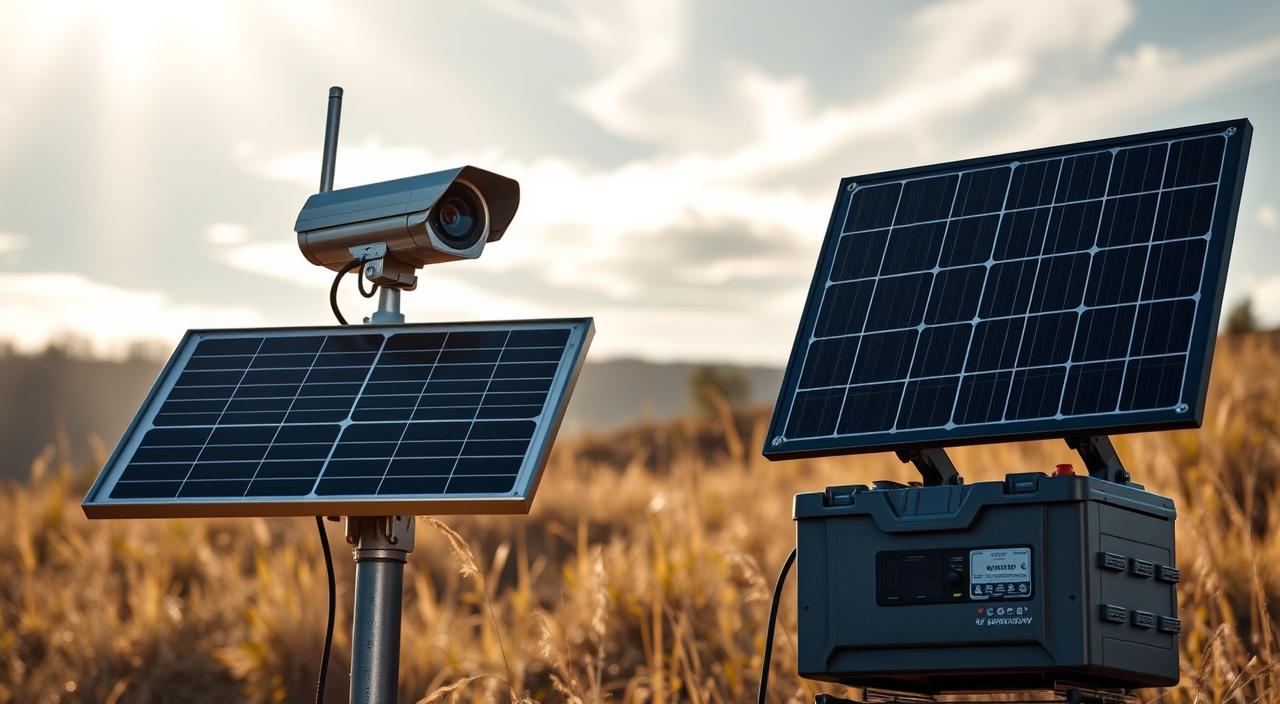
When to Consider Hybrid Solutions
Think about a hybrid system if your cameras face changing sunlight or need to run longer. This is key for outdoor surveillance camera power options in places with shifting weather.
Setting Up Automatic Switching Between Power Sources
It’s important to set up automatic switching between solar and battery power. A charge controller can manage this. It switches sources as needed to keep your cameras running.
| Feature | Solar Power | Battery Backup | Hybrid System |
|---|---|---|---|
| Reliability | Dependent on sunlight | Limited by battery life | Highly reliable |
| Cost | Initial investment in panels | Ongoing battery replacement | Higher initial cost, but long-term savings |
Choosing a hybrid power solution means your outdoor cameras will always be ready. They offer off-grid outdoor camera power solutions that are both dependable and cost-effective.
How to Power Outdoor Cameras in Areas Without Electricity: Step-by-Step Guide
To power outdoor cameras where there’s no electricity, you need a solid plan. This guide will help you set up your off-grid camera system.
Planning Your Off-Grid Camera Setup
First, figure out what you need for surveillance. Think about how many cameras you'll need, their power use, and your location's challenges.
- Determine the number of cameras needed to cover the desired area.
- Calculate the total power required based on the cameras’ specifications.
- Assess the environmental conditions that may affect your setup, such as sunlight exposure and temperature fluctuations.
Gathering the Necessary Equipment
With a plan in place, gather your equipment. You’ll need solar panels, batteries, a charge controller, and the cameras.
Key Components:
- Solar Panels: Choose panels that are durable and suitable for your climate.
- Batteries: Select batteries with sufficient capacity to store energy for your cameras.
- Charge Controller: This regulates the energy flow from the solar panels to the batteries.
- Cameras: Opt for cameras with low power consumption to maximize efficiency.
Installation Process Walkthrough
The installation process includes mounting solar panels, connecting power components, and testing your system.
Mounting Solar Panels
Mount solar panels in a spot that gets lots of sunlight. Make sure they’re securely attached to handle different weather.

Connect the solar panels to the charge controller, then to the batteries, and lastly to the cameras. Make sure all connections are tight and follow the manufacturer’s guidelines.
Testing Your System
After installing, test your system to make sure it works right. Check that the cameras are getting power and the system is running smoothly.
By following these steps, you can power your outdoor cameras in areas without electricity. Remember to keep your system in good shape for the best performance.
Alternative Power Sources for Outdoor Security Cameras
Looking into different power sources is key for outdoor security cameras. There are many ways to power these cameras without using regular electricity.
Wind-Powered Options
Wind power is a good choice for outdoor cameras in windy places. It uses wind turbines to make electricity, which is stored in batteries.
Fuel Cell Technology
Fuel cells are another power option. They turn chemical energy into electricity, perfect for places far from power lines.

Portable Power Stations
Portable power stations are getting more popular. They can be charged with solar panels, wind turbines, or electricity, making them flexible.
Power Over Ethernet (PoE) with Extended Cables
PoE technology sends power and data over one Ethernet cable. It’s useful for cameras not too far from the power source.
| Power Source | Advantages | Disadvantages |
|---|---|---|
| Wind-Powered | Reliable in windy areas, renewable energy | Dependent on wind, initial cost |
| Fuel Cell | Long-lasting, reliable | High initial cost, fuel logistics |
| Portable Power Stations | Flexible, can be charged via multiple sources | Limited capacity, needs recharging |
| PoE with Extended Cables | Convenient, combines power and data | Limited by cable length, installation cost |
Low-Power Consumption Cameras for Extended Off-Grid Use
For areas without electricity, low-power cameras are a big help. They make off-grid surveillance work better. I’ll show you how to make your camera’s battery last longer or use more solar power.
Features That Reduce Power Consumption
Modern cameras for off-grid use have special features. These features help save power. They include:
- Low-resolution video when high detail isn’t necessary
- Motion detection to record only when activity is detected
- Adjustable frame rates to balance quality and power usage
- Power-saving modes that reduce functionality during certain times
For example, a camera with a low-power mode can cut power use by up to 50% when there’s no motion. This is great for battery operated outdoor cameras in remote places.
Top Energy-Efficient Camera Models
Some cameras are really good at saving energy. Here’s a look at a few:
| Camera Model | Power Consumption (W) | Battery Life (days) |
|---|---|---|
| Model A | 2.5 | 120 |
| Model B | 3.0 | 90 |
| Model C | 2.0 | 150 |
As shown, some solar powered security cameras can last up to 150 days on one charge. They’re perfect for off-grid use.
“The key to successful off-grid surveillance is choosing the right equipment and configuring it for maximum efficiency.” – Surveillance Expert
Configuring Settings to Minimize Power Usage
To get the most from your off-grid camera, setting it up right is key. Here are some tips:
- Adjust the sensitivity of motion detection to avoid unnecessary recordings.
- Lower the video resolution if high detail isn’t required.
- Use power-saving modes during periods of low activity.
By following these tips, you can make your camera’s power last longer. This means you can keep watching even in remote spots.
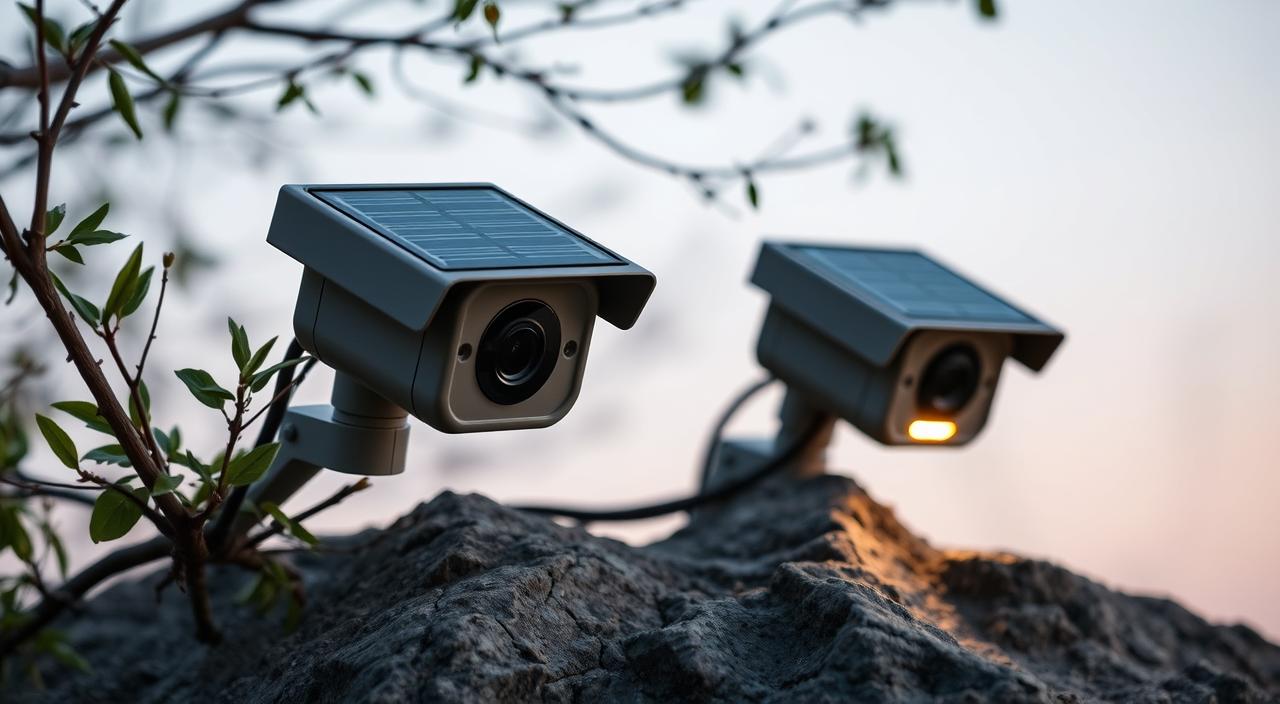
Weatherproofing and Protecting Your Off-Grid Camera System
Keeping your off-grid camera system safe from the weather is key. Harsh weather can hurt how well your outdoor cameras work and how long they last.
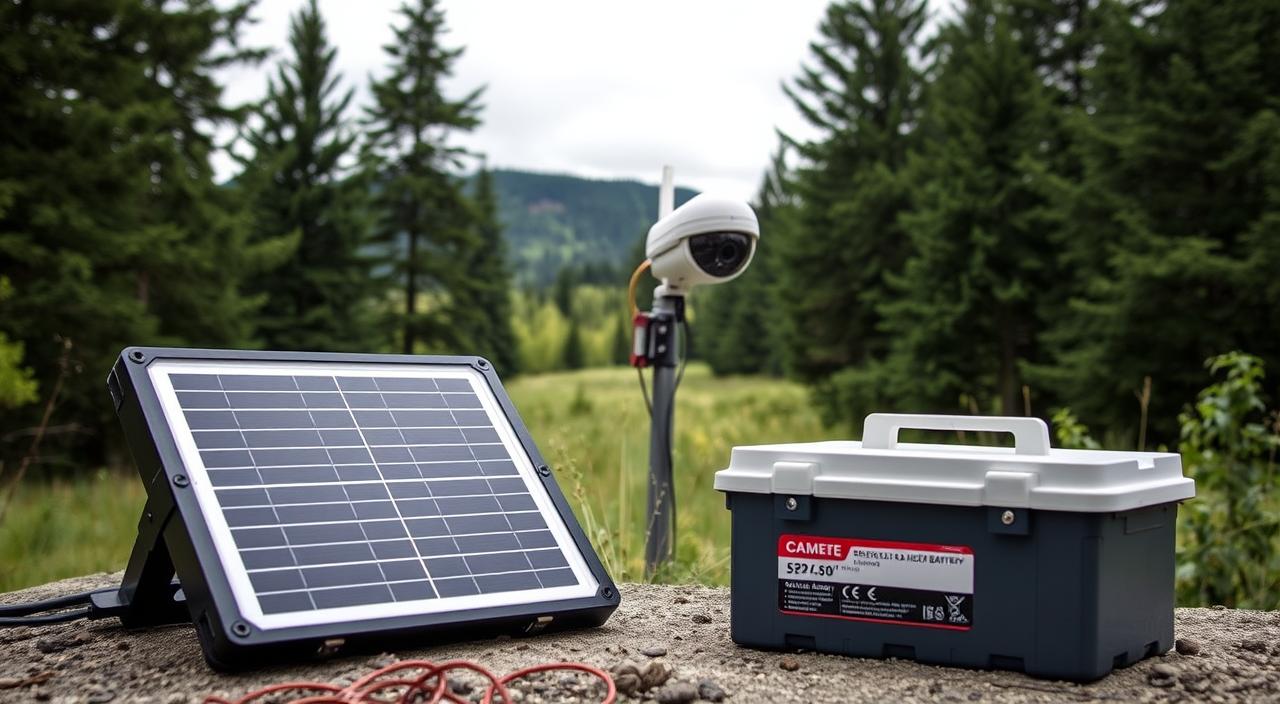
Protecting Solar Panels and Batteries from the Elements
Solar panels and batteries are vital for your off-grid camera system. Use weatherproof boxes and a protective layer to keep them safe from rain, snow, and extreme heat.
Seasonal Considerations for Different Climates
Every climate has its own weather challenges. In snowy places, make sure solar panels are set to let snow slide off. Near the coast, guard your system against saltwater damage.
Maintenance Schedule to Ensure Longevity
Regular upkeep is essential for your off-grid camera system’s life. Check it every 6 months, clean the solar panels, and look for any damage.
| Maintenance Task | Frequency | Importance |
|---|---|---|
| Clean Solar Panels | Every 3 months | High |
| Inspect for Damage | Every 6 months | High |
| Check Battery Health | Every 12 months | Medium |
By sticking to these tips, your off-grid outdoor camera system will stay reliable and effective for years.
Real-World Applications and Success Stories
I’ve seen how off-grid surveillance changes security in places without power. Outdoor camera power alternatives have opened new doors for many fields.
Remote Property Monitoring Case Studies
A rancher in rural Texas used solar-powered cameras to watch his land. This move cut down on livestock theft and boosted security.
Wildlife Observation Applications
Off-grid cameras are key for studying animals in the wild. Researchers use battery cameras to learn about animal behavior in places hard to reach.
Construction Site Security Solutions
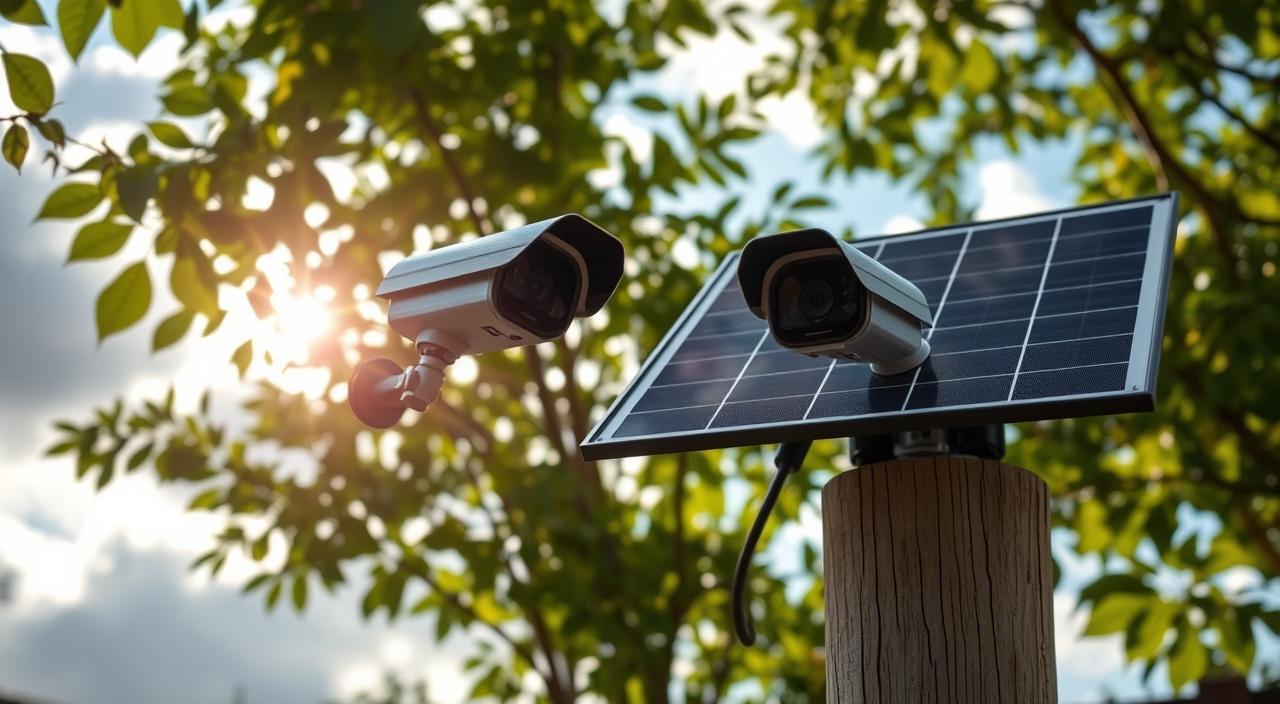
Construction sites in remote areas use hybrid power. Solar panels and batteries keep sites safe from theft and damage.
| Application | Power Solution | Benefits |
|---|---|---|
| Remote Property Monitoring | Solar-Powered | Reduced theft, improved security |
| Wildlife Observation | Battery-Operated | Insights into animal behavior |
| Construction Site Security | Hybrid (Solar + Battery) | Effective site security, reduced vandalism |
These examples show off-grid cameras work well in different situations. Knowing what each situation needs helps pick the right power for outdoor cameras.
Troubleshooting Common Power Issues with Off-Grid Cameras
Power problems can really mess with how well off-grid cameras work. Knowing how to find and fix these issues is key. This is true whether you have solar powered security cameras or battery operated outdoor cameras.
Diagnosing Power Supply Problems
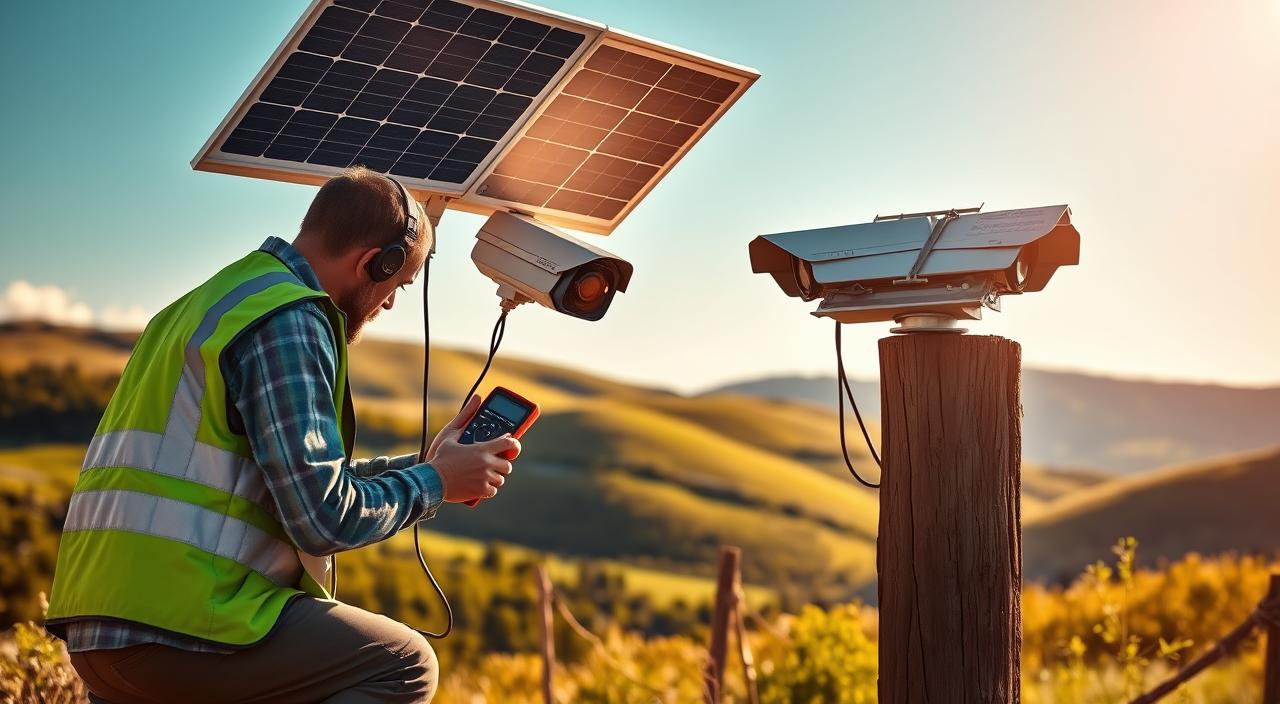
Start by figuring out where the power problem is coming from. Look at the solar panel or battery to make sure it’s working right. Also, check the cables and connections for any damage.
Quick Fixes for Common Issues
Some common problems include solar panels not working as well and batteries not charging right.
Solar Panel Efficiency Drops
If your solar panel isn’t working as well, it might be dirty. Try cleaning it to see if that helps.
Battery Charging Problems
For battery charging issues, make sure everything is connected right. If the battery is old or damaged, it might need to be replaced.
| Issue | Quick Fix |
|---|---|
| Solar Panel Efficiency Drop | Clean the panel surface |
| Battery Charging Problem | Check connections, replace battery if necessary |
When to Call a Professional
If you can’t fix the problem yourself, it’s time to get help from a pro. They can do a deeper check and fix or replace parts as needed.
FAQ Of Power Outdoor Cameras Without Electricity?
What are the best power options for outdoor cameras in areas without electricity?
For outdoor cameras without electricity, the top choices are solar-powered, battery-operated, or hybrid systems. Hybrid systems mix solar and battery power for extra reliability.
How do I determine the power requirements for my outdoor security camera?
To figure out your camera’s power needs, look at voltage, amperage, and recording modes. Check your camera’s specs for these details.
Can I use a solar panel kit to power my outdoor camera, and what are the installation considerations?
Yes, solar panel kits work well for outdoor cameras. Place panels where they get the most sun and secure them to withstand weather.
What are the benefits of using a hybrid power solution for my outdoor security camera?
Hybrid systems offer steady power and reliability. They use solar and battery power, ensuring your camera works even when sunlight is low.
How can I extend the battery life of my outdoor camera?
To make your camera’s battery last longer, adjust settings to use less power. Choose energy-saving cameras and keep the battery in good shape.
Are there alternative power sources for outdoor security cameras beside solar and battery?
Yes, other options include wind power, fuel cells, portable stations, and Power Over Ethernet (PoE). These depend on your location and needs.
How do I weatherproof and protect my off-grid camera system?
To keep your off-grid system safe, shield solar panels and batteries from weather. Consider climate changes and follow a maintenance plan for long life.
What are some common power issues with off-grid cameras, and how can I troubleshoot them?
Issues like solar panel efficiency drops and battery charging problems are common. Clean panels and replace batteries as needed. If problems continue, get professional help.
Conclusion
Powering outdoor cameras in areas without electricity needs careful thought. We must consider the type of power solution, camera needs, and location challenges.
There are many ways to power outdoor cameras, like solar, battery, or hybrid options. Knowing these can help you choose the right one for your needs.
When picking a power solution, think about your surveillance needs and camera power needs. Also, consider the challenges of your location.
Technology is always getting better, so we’ll see new ways to power outdoor cameras soon. This will help secure remote places and watch over important areas.
By looking at the options in this article, you can find a reliable power solution for your outdoor cameras. This will give you peace of mind and better security.