Outdoor Lighting and Yard Design Boosting Family Home Security
Key Takeaways
- Proper lighting placement can eliminate dark spots and enhance visibility around your property.
- Motion-activated lights offer an additional layer of protection by startling potential intruders.
- Choosing the right type of lighting, like LEDs, can balance security with energy efficiency.
- Strategic landscaping choices can complement lighting and improve overall security.
- Understanding the benefits of a well-lit yard significantly boosts home safety.
- Regular maintenance is key to keeping your outdoor lighting system effective.
It’s late, and you’re settling in for the night. Suddenly, you hear a rustle outside. Your mind races, and your heart pounds.
A well-lit yard is crucial. Effective outdoor lighting can make a huge difference in how safe you feel. This post explores practical yard design ideas and lighting techniques to create a more secure environment for your family.
We will explore how smart placement, motion sensors, and the right light types can significantly deter unwanted visitors and provide peace of mind.
You’ll gain practical knowledge to increase the safety of your home, reducing your chances of becoming a victim. This will help you protect your loved ones.

Strategic Placement of Outdoor Lighting
The placement of your outdoor lighting is just as vital as the lights themselves. Effective placement means you can expose any lurking presence and make potential intruders more visible.
This includes illuminating pathways, entry points, and areas of your yard that provide cover, like bushes or trees.
The goal is to eliminate shadows where someone might hide, effectively making your property less attractive to wrongdoers.
Well-placed lights, alongside a well-thought-out yard design, can significantly boost the overall safety of your family and home. Furthermore, it adds curb appeal and elevates the aesthetics of your home.
Illuminating Entry Points
Front doors, back doors, and garage entrances are prime spots for lighting. These are the most common entry points, making them obvious targets for those intending harm.
Install lights near these access points, ensuring they are bright enough to deter unwanted activity. Consider using lights with a wide beam angle to cover a larger area and prevent shadows.
Motion-activated lights are especially beneficial here, as they activate when someone approaches, immediately alerting you and potentially scaring away intruders.
This combination acts as a first line of defense, making it harder for someone to approach without being seen.
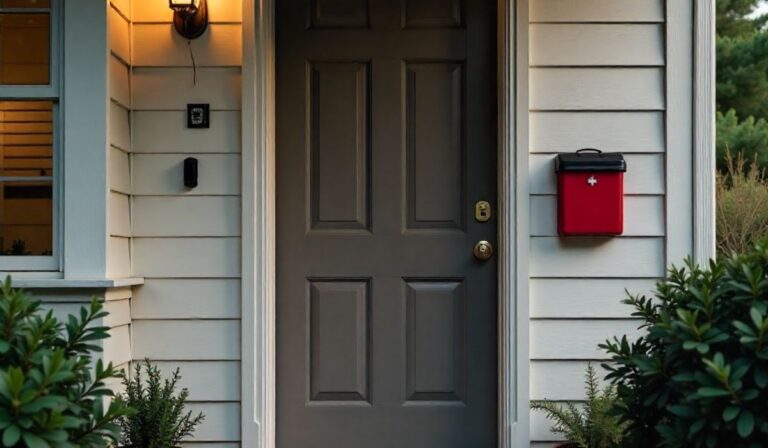
- Front Door: Install a bright light fixture above or near your front door, making it difficult for anyone to approach unseen. Consider a smart light with a camera for extra security.
- Back Doors: Back doors are particularly vulnerable. Ensure they are well-lit, perhaps with a floodlight or a series of smaller lights along the path leading to the door.
- Garage Entrance: Light the garage entrance to prevent break-ins. This light should be bright and preferably motion-activated, alerting you to any presence.
Lighting Pathways and Walkways
Pathways and walkways leading to your home should be well-lit to prevent accidents and increase safety.
Lights that illuminate paths can help you see where you’re going at night. This also prevents anyone from hiding in the shadows.
Consider using low-level path lights or bollard lights for a soft, even glow, avoiding harsh glare. This lighting strategy creates a welcoming atmosphere while also discouraging unwelcome visitors.
A secure, well-lit pathway encourages safe navigation around your property and supports overall outdoor lighting and yard design plans.
- Path Lights: Place path lights along walkways to guide visitors and illuminate the route.
- Bollard Lights: Bollard lights can be placed along walkways or driveways.
- Step Lights: Install step lights on stairs to reduce tripping hazards and add security.
Eliminating Dark Spots
Dark spots create opportunities for concealment. These areas, like dense bushes or corners of the yard, can become hiding places.
Scan your yard at night to see where shadows are deepest. Consider installing lights in these spots to eliminate hiding places.
Uplighting, which shines light upwards onto trees or walls, can illuminate these areas creatively and effectively.
Be mindful of the light’s direction to avoid glare while maximizing its security benefits. Regular yard design adjustments to address shadow concerns are essential for maintaining safety.
- Strategic Light Placement: Place lights to eliminate shadowy corners and under trees.
- Uplighting: Use uplights to illuminate trees and walls, filling dark gaps and improving visibility.
- Motion Sensors: Use motion sensors to activate lights in areas with heavy shadow, alerting you when someone approaches.
Choosing the Right Type of Outdoor Lighting
The type of outdoor lighting you choose can significantly impact both your home’s safety and its energy efficiency.
Different light types offer varying levels of brightness, energy use, and longevity. LEDs, in particular, are an excellent choice due to their energy efficiency and long lifespan.
Consider the color temperature of your lights; brighter, cooler-toned lights tend to be more effective for security purposes.
The right lighting choice blends safety, efficiency, and aesthetics seamlessly into your home’s yard design.
LED Lighting Benefits
LEDs (Light Emitting Diodes) are widely recognized as the top choice for outdoor lighting. They consume significantly less energy than traditional incandescent or halogen lights, reducing electricity bills.
LEDs also last much longer, reducing the need for frequent replacement. This translates into less waste and lower maintenance costs.
Their versatility allows for various designs, from spotlights to floodlights, providing flexibility for different security needs.
The combination of energy savings, longevity, and design options makes LEDs a powerful ally in home safety plans.
- Energy Efficiency: LEDs use up to 75% less energy than incandescent bulbs.
- Longevity: LEDs can last for tens of thousands of hours, reducing replacement needs.
- Variety: LEDs come in diverse styles and color temperatures, fitting any design aesthetic.
Choosing the Right Brightness
Brightness, measured in lumens, significantly affects the effectiveness of your outdoor lighting. Too little light, and the area remains dark; too much, and you may face glare issues.
Aim for a balanced approach. Choose lights with the appropriate lumen output for the specific area.
For example, entry points require brighter lights, while path lights may need less. Considering the purpose and size of the space is essential when determining the right brightness. This helps make your home secure while maintaining a comfortable and inviting atmosphere.
- Entry Points: Use bright lights with high lumen output for entry points.
- Pathways: Choose lights with a lower lumen output to guide along paths.
- Areas Requiring Detail: Use brighter lights to highlight specific areas such as a shed or a detached garage.
Understanding Color Temperature
Color temperature impacts how your lighting appears and the security it provides. Color temperature is measured in Kelvin (K).
The lower the Kelvin, the warmer the light (more yellow). Higher Kelvin numbers indicate cooler, bluer light.
For security, cooler light (4000K–6500K) is usually preferred. It provides greater clarity and can make it easier to identify faces or objects.
However, balance this with your aesthetic preferences, as overly cold light can be less inviting. Choosing the correct color temperature enhances the security features of your yard design.
- Cool White (4000K-5000K): Best for security and providing clarity.
- Daylight (5000K-6500K): Offers high visibility and is good for areas needing the most illumination.
- Warm White (2700K-3000K): This creates a more inviting atmosphere, suitable for walkways and social areas.
Incorporating Motion Sensors and Smart Lighting
Motion sensors and smart lighting provide an advanced layer of security. Motion sensors activate lights when movement is detected, startling potential intruders and alerting you to activity on your property.
Smart lighting allows remote control, scheduling, and integration with other security devices. These advancements provide convenience and extra security features.
Incorporating these technologies into your yard design and outdoor lighting creates a dynamic and responsive security system.
The Benefits of Motion Sensors
Motion sensors are an integral part of home security. They work by detecting movement in a specific area, triggering lights to turn on automatically.
This can deter intruders by suddenly illuminating the area, making them feel exposed. Motion sensors also alert you to possible threats, giving you time to respond.
Many motion sensors are adjustable, allowing you to fine-tune the sensitivity and range of detection.
The use of motion sensors adds another layer of security, creating a safe environment and providing peace of mind.
- Deterrent: Suddenly activated lights can deter potential intruders.
- Alert System: They provide an alert system that notifies you of activity on your property.
- Customization: Sensitivity and range can be adjusted to match your needs.
Smart Lighting Features
Smart lighting offers features beyond basic illumination. Smart lights connect to your home’s Wi-Fi network, allowing you to control them remotely.
You can turn lights on or off from your smartphone, create schedules, and integrate them with other smart home devices.
Many systems offer features like geofencing, which automatically turns lights on when you’re approaching home.
The ability to monitor and control your lights adds convenience and an extra layer of security. This integrated smart lighting system simplifies outdoor lighting management and improves the security of your yard design.
- Remote Control: Control your lights from anywhere using your smartphone.
- Scheduling: Set specific times for lights to turn on and off.
- Integration: Integrate lights with other smart home security devices.
Integrating Lighting with Security Systems
Integrating your outdoor lighting with your existing security system maximizes protection. Some systems have the ability to automatically turn on lights if the alarm is triggered.
This creates a more coordinated response to potential threats. You can also monitor your lights from a centralized security app, giving you a complete overview of your home’s security status.
When lights are combined with cameras, you can capture clear images of anything that triggers your system. This integrated approach creates a robust and responsive security setup.
- Alarm Triggered Response: When the alarm goes off, lights will immediately turn on to scare intruders.
- Camera Integration: Link your lights with security cameras to capture events in detail.
- Centralized Control: Use a single app to control your lights and monitor the security system.
Yard Design Elements for Enhanced Security
Yard design choices can significantly impact your home’s security. Landscaping, fencing, and the use of natural elements can work together to deter intruders.
Choosing the right plants and materials is vital. Pruning bushes, maintaining clear sightlines, and installing effective fencing contribute to a safer environment.
A thoughtful yard design supports and reinforces the security measures, working hand-in-hand with outdoor lighting to protect your family and property.
Landscaping for Security
The plants and trees you choose can play a role in your home’s security. Avoid plants that provide hiding places near entry points, such as tall bushes.
Consider thorny plants under windows or around fences to make it harder for intruders to approach.
Trim your plants regularly to maintain clear sightlines to make it difficult for anyone to hide in the yard. Choosing the right landscaping can naturally improve the security of your property.
- Avoid Hiding Spots: Avoid planting tall bushes near entry points.
- Use Thorny Plants: Plant thorny bushes to deter intruders.
- Maintain Sightlines: Prune trees and bushes to improve visibility.
Fencing and Barriers
Fences add a physical barrier and can prevent unwanted entry. Choose a fence that is both attractive and serves security purposes.
Solid fences provide privacy, but they can block visibility. A combination of features can be used to balance privacy with visibility.
Consider adding a gate with a secure locking mechanism. Regular maintenance of the fence is essential to prevent it from being compromised. Fences work together with outdoor lighting to secure your property.
- Type of Fence: Choose a fence that suits your needs.
- Gates: Install gates with strong locks.
- Maintenance: Maintain your fence to ensure it remains effective.
Maintaining Clear Sightlines
Maintaining clear sightlines is critical for security. Clear sightlines mean that you, your neighbors, and security systems can easily see any movement.
Trim trees and bushes that block the view from your windows or doors. Consider removing obstacles that could provide cover for intruders.
This also enhances the effectiveness of your outdoor lighting. Clear sightlines create a more open environment, making your property safer.
- Regular Trimming: Regularly trim trees and bushes to ensure a clear view.
- Remove Obstacles: Remove any obstacles that block your view.
- Consider Views: Pay attention to your view from windows and doors.
Regular Maintenance and System Checks
Like any security system, outdoor lighting requires regular maintenance to remain effective. This includes checking bulbs, inspecting wiring, and cleaning fixtures.
Make it a habit to regularly test your lights to ensure they are working properly. Proper maintenance ensures that your lighting system is always ready to protect your home. Regular maintenance ensures you continue to benefit from your outdoor lighting investment.
Checking and Replacing Bulbs
Check your light bulbs regularly to see if any have burned out. Replace burned-out bulbs immediately to maintain proper illumination.
The lifespan of bulbs varies, so keep spares on hand. You should also clean your light fixtures to remove any dust or debris. This helps to maximize the light output. Proper bulb maintenance keeps your property secure.
- Regular Inspections: Regularly check your lights.
- Spare Bulbs: Keep spare bulbs handy.
- Cleaning: Clean your light fixtures to maximize brightness.
Inspecting Wiring and Fixtures
Wiring and fixtures can be damaged by weather or wear. Inspect your wiring regularly for damage, such as cracks or fraying.
Ensure all fixtures are securely mounted. If you notice any problems, have them addressed by a qualified electrician.
This helps you to reduce the risk of electrical hazards and ensures that your lighting system continues to operate efficiently. These maintenance steps are essential for overall home safety.
- Wiring: Inspect wiring for damage.
- Fixtures: Check for any loose or damaged fixtures.
- Professional Help: Have any electrical issues addressed by a professional.
Testing Motion Sensors and Smart Features
Test your motion sensors and smart lighting features often. Make sure that motion sensors are triggering lights correctly.
Also, test any remote control features or schedules to ensure they are operating as planned. If you notice any issues, troubleshoot them immediately.
Testing these features helps ensure that your system will be effective. With regular checks, you can maintain the high performance of your outdoor lighting.
- Motion Sensors: Regularly test motion sensors.
- Smart Features: Test all smart lighting features.
- Troubleshooting: Quickly address any identified problems.
FAQ Of Outdoor Lighting and Yard Design Boosting Family Home Security
What is the best type of outdoor light for security?
LEDs are the top choice because they are energy-efficient, long-lasting, and come in various styles and color temperatures, making them great for security and aesthetics.
How often should I test my motion sensors?
Test your motion sensors at least once a month to ensure they are working. This can be done by simply walking around the areas where they are installed and verifying that the lights turn on.
Should I use a fence to increase security?
Yes, a fence can improve security by creating a physical barrier. Combine it with strategically placed lighting to enhance safety. Consider your neighborhood and the look you prefer when selecting a fence.
What is the ideal color temperature for security lighting?
For security, a cooler color temperature (4000K-6500K) is usually preferred, as it provides brighter light and helps with visibility. However, you should still consider your personal preferences.
How can I integrate my outdoor lights with my security system?
Many security systems allow you to integrate your lights so they automatically turn on if the alarm is triggered. You can often control and monitor your lights through a security app.
Final Thoughts
Creating a secure home environment involves a combination of smart strategies. Effective outdoor lighting is a crucial element.
The strategic placement of lights, choosing efficient LEDs, and integrating motion sensors can significantly deter potential intruders.
Combined with thoughtful yard design features like well-placed landscaping and secure fencing, you can boost your property’s defenses.
Remember that regular maintenance is critical to the continued effectiveness of your lighting system.
By implementing these suggestions, you’ll not only enhance your home’s security, but also improve your peace of mind.
Start by assessing your property, identifying areas for improvement, and then taking action to light up the night for a safer, more secure home.