Smart Home Vs Home Automation: What’S The Real Difference
Key Takeaways
- You’ll discover that a smart home is about connected devices that can be controlled remotely.
- You will learn that home automation is about making those devices work together automatically.
- You’ll see how these two ideas can overlap to create a truly convenient living space.
- You will gain clarity on the specific benefits each concept offers for your daily life.
- You will understand how to identify if a system is primarily smart or automated.
- You’ll be ready to make informed decisions about upgrading your home technology.
Many people wonder about the distinction between a smart home and home automation, and it can be a bit confusing at first.
It’s easy to get these terms mixed up when you’re just starting to explore ways to make your house work better for you. But don’t worry!
We’re going to break down the Smart home vs home automation: what’s the real difference in a way that’s super simple and easy to follow.
Get ready to learn how these concepts work together and what makes them unique, and we’ll show you exactly how to figure it out.
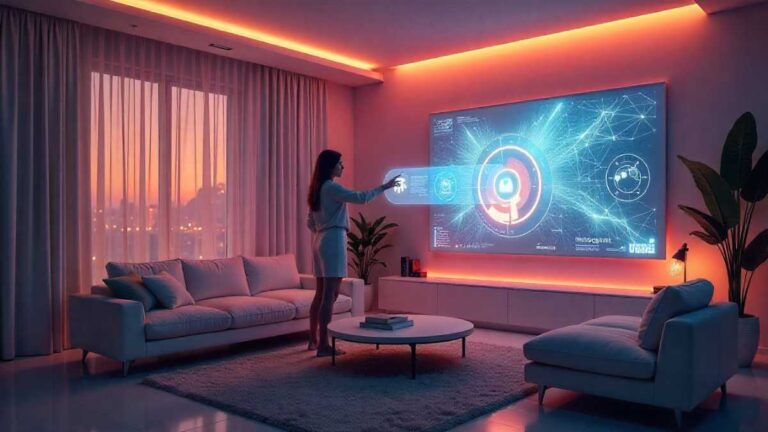
![Smart Home Vs Home Automation What’S The Real Difference[1]](https://gigasecurehome.com/wp-content/uploads/2026/01/Smart_Home_Vs_Home_Automation__WhatS_The_Real_Difference1.jpg)
Understanding the Basics
What is a Smart Home?
Let’s start with the idea of a smart home. Think of it as your house having a brain, but not in a creepy way! It means you have devices that can connect to your Wi-Fi and can be controlled using an app on your phone or tablet.
You might have smart lights that you can turn on or off from your couch, or a smart thermostat that you can adjust from your office. It’s all about giving you more control over individual things in your home, even when you’re not right there.
These devices often have some level of intelligence. For instance, a smart security camera can send you an alert if it detects motion. A smart speaker can play your favorite music just by you asking it.
The key here is that you can interact with these devices, usually by giving them commands or checking their status. They make your life a little easier by offering convenience and remote access to different parts of your home. It’s like having a personal assistant for your appliances and systems.
What is Home Automation?
Now, let’s talk about home automation. This is where things get really interesting because it’s about making your devices work together without you having to ask them to. Instead of just controlling lights, automation is about setting up sequences or routines.
For example, you could set your smart lights to turn on automatically at sunset, or have your smart blinds close when the sun gets too bright. It’s about creating a flow that makes your home respond to certain conditions or times.
Home automation takes the “smart” features and links them up. Imagine this: you leave the house. Your smart lights turn off, your smart thermostat adjusts to an energy-saving mode, and your smart security system arms itself.
This all happens without you pressing a button for each action. It’s about creating a seamless experience where your home anticipates your needs and acts accordingly. This is the core of making your living space more efficient and comfortable, handling tasks in the background.
The Overlap and the Difference
Where Smart Homes and Home Automation Meet
You might be thinking, “So, if I have smart lights, do I have a smart home?” Yes, you do! And if those smart lights turn on automatically when you unlock your smart front door, then you’re also stepping into home automation. The two concepts are closely related and often work hand-in-hand.
A smart home provides the building blocks. It's having the individual "smart" devices that can be controlled. Home automation is what you build with those blocks.
It’s making those smart devices communicate and act together to perform tasks automatically. You can have a smart home without much automation, but it’s hard to have true home automation without smart devices to automate.
Pinpointing the Real Difference
The main difference boils down to control versus action. In a smart home, the emphasis is on your ability to control devices, whether you’re home or away. You’re the one initiating the action, even if it’s through an app.
With home automation, the system itself is designed to take actions based on pre-set rules, schedules, or triggers. It’s about the house acting on its own, making life simpler and more efficient for you.
Think of it this way: a smart thermostat lets you adjust the temperature from your phone. That’s a smart home feature. A home automation setup might involve that smart thermostat working with smart sensors to learn your schedule and automatically adjust the temperature to save energy when you’re not home, and then warm up the house before you arrive.
The automation aspect is the “set it and forget it” functionality that goes beyond simple remote control.
Examples to Make it Clear
Smart Home in Action
Let’s look at some everyday examples of a smart home. You buy a smart plug. You plug your bedside lamp into it.
Now, you can use your smartphone to turn that lamp on or off. You might even be able to schedule it to turn on at 7 AM to help you wake up. That's smart.
You can also get a smart doorbell that lets you see and talk to visitors through your phone, no matter where you are.
Another example is a smart refrigerator. It might have a screen where you can leave notes for your family or check what’s inside while you’re at the grocery store. These are all devices that add convenience and connectivity to your home, allowing you to interact with them remotely.
The focus is on the enhanced control and information you receive from these individual devices.
Home Automation in Action
Now, let’s see home automation in action. Imagine you’re heading to bed. You say, “Goodnight” to your smart speaker.
This command triggers a pre-programmed scene. Your smart lights in the living room turn off, the thermostat lowers the temperature, and your smart locks secure the front door. This is automation; one command triggers multiple actions simultaneously.
Another common automation is a “welcome home” routine. When your smart garage door opens as you arrive, your entryway lights turn on, and your smart speaker starts playing a calming playlist.
Or, during hot summer days, your smart blinds could automatically lower when the outdoor temperature sensor detects it’s getting too hot inside, and your smart fan kicks on.
These scenarios illustrate how devices work together to create a more comfortable and energy-efficient environment without constant manual input.
Key Features and Benefits
Smart Home Features
- Remote control of devices via smartphone or tablet.
- Voice control through smart speakers.
- Real-time status updates and alerts.
- Increased convenience and accessibility.
- Enhanced security through smart cameras and locks.
- Energy monitoring and potential savings with smart plugs and thermostats.
Home Automation Benefits
- Automated routines that simplify daily tasks.
- Increased energy efficiency by optimizing device usage.
- Enhanced comfort through pre-set environmental controls.
- Improved security with integrated systems.
- Time savings by eliminating repetitive manual actions.
- Greater convenience through proactive home management.
Choosing the Right Path
Starting Your Smart Home Journey
If you’re just starting, think about what bothers you most or what would make your life easiest. Is it fumbling for light switches in the dark? Or maybe forgetting to turn off the lights when you leave?
You could begin with a few smart plugs and smart bulbs. These are generally easy to set up and give you a taste of remote control and scheduling.
Consider a smart speaker, like Amazon Echo or Google Home. These are great central hubs that can control many smart devices and allow for voice commands, which can be a simple way to start experiencing both smart control and some basic automation. Don’t feel like you need to automate everything at once.
Small steps can lead to a big difference in your daily life.
Building Towards Automation
Once you’re comfortable with individual smart devices, you can start thinking about how they can work together.
If you have smart lights and a smart speaker, you can create a routine where saying “Movie time” dims the lights and turns on the TV. This is where the real magic of automation begins to shine.
Look for devices that are compatible with the same smart home platforms or ecosystems. For example, if you start with Google Assistant, look for devices that work well with it. This compatibility is key to creating seamless automations.
The goal is to build a system that supports your lifestyle and makes your home more responsive and helpful.
Technology and Compatibility
The Role of Hubs and Ecosystems
Sometimes, to get devices to talk to each other smoothly, you might need a central hub. This is a device that acts as a translator between different smart home products that might use different communication languages.
Brands like Samsung SmartThings or Hubitat offer hubs that can manage a wide range of devices.
Alternatively, many smart home platforms, like Apple HomeKit, Google Home, and Amazon Alexa, act as virtual hubs.
They provide an ecosystem where compatible devices can connect and be controlled. Choosing an ecosystem often means sticking with brands that are certified to work with that system to ensure smooth operation and easy setup.
Ensuring Devices Work Together
Compatibility is super important. Before you buy any smart device, check if it works with your existing system or the smart home platform you plan to use. Look for labels like “Works with Alexa,” “Works with Google Assistant,” or “Works with Apple HomeKit.”
Using open standards like Zigbee and Z-Wave can also help. Many devices use these protocols, and a compatible hub can often connect to them. This gives you more flexibility in choosing devices from different manufacturers.
The more devices that can speak the same language, the more complex and useful automations you can build.
Table: Smart Home vs. Home Automation Comparison
| Feature | Smart Home | Home Automation |
|---|---|---|
| Primary Focus | Device Control and Connectivity | Automated Device Action and Integration |
| User Interaction | Initiated by User (App, Voice) | Triggered by Events, Schedules, or Rules |
| Example | Turning on a light with your phone. | Lights turning on automatically at sunset. |
| Goal | Convenience, Remote Access | Efficiency, Comfort, Time-Saving |
| Requirement | Smart devices. | Smart devices that can interact. |
FAQ Of Smart Home Vs Home Automation: What’S The Real Difference
Is a smart thermostat considered a smart home device or home automation?
A smart thermostat that you can control with an app is a smart home device. If that thermostat then automatically adjusts the temperature based on your schedule or occupancy sensors, that’s home automation.
Can I have home automation without a smart home?
Not really. Home automation relies on smart devices that can connect to a network and be programmed to act. You need the smart devices first to then automate them.
What’s the easiest way to start with home automation?
Start by setting up a simple routine with a smart speaker and a few smart lights or plugs. For example, create a “Good morning” routine that turns on specific lights and plays a short news briefing.
Do I need a hub for home automation?
It depends on the devices and the platform you use. Many modern systems use Wi-Fi-based devices that connect directly to a service like Google Home or Alexa, acting as a virtual hub. However, for more complex setups or devices using Zigbee or Z-Wave, a physical hub might be necessary.
Is a smart lock just a smart home device?
A smart lock that you can lock and unlock with your phone is a smart home device. When it’s programmed to automatically lock when you leave the house, or unlock when you disarm your smart security system, then it becomes part of home automation.
Final Thoughts
So, the difference between a smart home and home automation is really about how you look at it. A smart home is all about having connected gadgets that you can control, making your life a bit easier with remote access and information. It’s like giving your house more individual talents.
Home automation takes those talents and teaches them to work together. It’s about creating scenes and schedules so your house can take care of things on its own, making your living space more efficient and comfortable without you having to do much.
You can start with simple smart devices and gradually build up to more complex automations as you get comfortable.
Don’t feel pressured to do everything at once. Pick a few things that will genuinely help you and enjoy the process of making your home work better for you.


![10 Automations to Secure Your Property While You Are Away[1]](https://gigasecurehome.com/wp-content/uploads/2025/10/10_Automations_to_Secure_Your_Property_While_You_Are_Away1-768x448.jpg)
![10 Automation Hacks to Reduce Phantom Power Usage for a Greener Home[1]](https://gigasecurehome.com/wp-content/uploads/2025/10/10_Automation_Hacks_to_Reduce_Phantom_Power_Usage_for_a_Greener_Home1-1-768x448.jpg)