Room-By-Room Guide To Making Your Home Safe For Curious Toddlers
Key Takeaways
- Learn how to identify and eliminate potential hazards in each room of your home.
- Discover practical tips for securing furniture, appliances, and other household items.
- Find out about the best products for childproofing and where to get them.
- Understand the importance of consistent supervision and safety habits.
- Explore how to create a safe outdoor space for your toddler.
- Learn what to do in case of an accident and how to provide first aid.
Time your toddler decided the kitchen cabinets were a fascinating puzzle to solve, and suddenly you were picking up a stray bottle of cleaner? We’ve all been there!
Little ones are naturally curious, and that curiosity can lead to some unexpected adventures. Keeping your child safe at home is a top priority, which is why a room-by-room guide to making your home safe for curious toddlers is essential.
This guide will help you spot potential dangers and take the right steps to create a safe and comfortable environment.
By the end of this, you’ll be prepared to childproof your house effectively, giving you peace of mind and allowing your little explorer to roam freely (with supervision, of course!).

Securing Your Home: A Room-by-Room Guide
Childproofing your home isn’t a one-size-fits-all solution; it’s an ongoing process. Every room presents unique challenges and requires specific safety measures.
This detailed guide takes you room by room, highlighting the most common hazards and providing actionable solutions.
It’s about more than just buying baby gates; it’s about shifting your perspective and seeing your home through your toddler’s eyes.
It will help you spot potential dangers you might overlook and allows you to create a secure environment where your little one can safely explore and learn.
Keep in mind that constant supervision remains the most important part of keeping your toddler safe.
The Living Room: A Hub of Activity
The living room is often the heart of the home, a place for family gatherings and playtime. However, it can also be packed with potential dangers for a curious toddler.
From sharp corners to tempting electrical outlets, you will need to pay close attention to ensure your child’s safety. Let’s explore how to make this space safe for your little explorer.
- Furniture and Sharp Edges: Coffee tables, end tables, and other furniture with sharp corners pose a significant risk.
Toddlers are naturally unsteady on their feet, making them prone to falls. Sharp edges on furniture can lead to serious injuries.
To address this, consider using corner guards on tables, shelves, and other furniture with sharp points.
These soft, protective covers cushion the impact of a fall, minimizing the risk of cuts and bruises. Ensure the corner guards are securely attached and made from non-toxic materials.
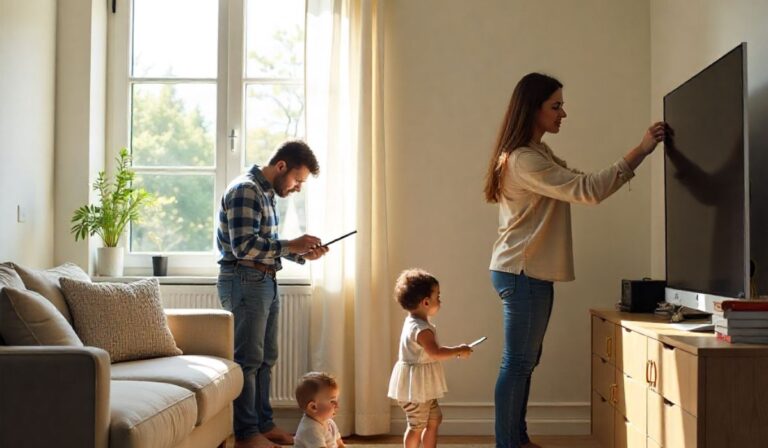
You should also think about the weight and stability of furniture. Heavy furniture can tip over if a child tries to climb on it. Anchoring furniture to the wall is a vital step in preventing these types of accidents.
Electrical outlets are like magnets for curious little fingers. To make your living room safe, install outlet covers.
There are different types available, from simple plastic plugs to more secure sliding covers that require a deliberate action to open.
Cords from lamps, electronics, and other devices can present a strangulation hazard. Secure loose cords out of reach of your child.
Use cord organizers to bundle cords together and keep them away from walking paths. Place furniture in front of cords when possible.
Be cautious with extension cords, which are easier for a toddler to access and play with. If your child pulls on a cord, the appliance attached to the cord might also fall.
- Small Objects: Choking Hazards
Small objects scattered around the living room are a major concern. Toddlers are naturally inclined to put things in their mouths, and any small item can become a choking hazard.
This includes small toys, coins, buttons, batteries, and even decorative items. Conduct a thorough sweep of the room, looking for anything small enough to swallow.
Keep small objects out of reach, stored in closed cabinets or drawers. Be especially careful of toys with small parts.
Check toys regularly to ensure they remain in good condition and don’t have any pieces that could break off.
You must also be cautious about anything you leave on tables or shelves. Items such as coins, paper clips, and medications should not be accessible to your child.
- Windows and Curtains: Preventing Falls and Strangulation
Windows can present hazards. Install window guards to prevent falls, especially on upper floors. Make sure window guards are strong and correctly installed. Window blind cords are a strangulation hazard.
The Kitchen: A Realm of Temptation
The kitchen can be a source of wonder and danger. It’s full of exciting things to touch, taste, and explore, but it’s also where you’ll find sharp knives, hot surfaces, and cleaning products.
A Room-by-Room Guide to Making Your Home Safe for Curious Toddlers should focus strongly on the kitchen.
Thorough childproofing in this room is important to protect your little explorer from harm. Here’s how to make your kitchen a safer place for your toddler.
- Cabinets and Drawers: Securing Potential Poisons
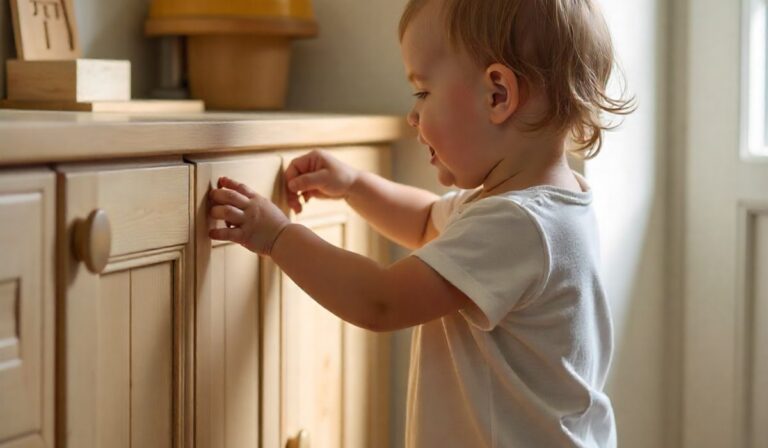
Cabinets and drawers are easy for toddlers to open. This can be very dangerous. The most important step is to install cabinet and drawer locks.
There are a variety of options available, from magnetic locks that require a special key to simple latch systems.
The goal is to make it difficult for your toddler to open them. Store all cleaning products, medications, and other hazardous items in locked cabinets or drawers that are out of reach.
Remember to place them up high, even if the cabinets are locked, because children have been known to climb.
- Appliances: Burns and Other Hazards
Appliances like the stove, oven, and refrigerator can be dangerous for toddlers. Always use the back burners of the stove when cooking and turn pot handles inward to prevent them from being grabbed.
Install stove guards to prevent your child from reaching the hot surface. When the oven is in use, keep the door locked.
Teach your child not to touch the oven or stove. Refrigerators can be a pinching hazard, especially the door seals.
Make sure your refrigerator door closes properly, and supervise your toddler when opening and closing the refrigerator. The refrigerator is more than a place to get a snack; it can be an entry point to danger.
- Sharp Objects: Knives, Utensils, and Other Potential Injuries
Sharp objects like knives, forks, and other utensils can be very dangerous if a toddler gets their hands on them. Store all knives and sharp utensils in locked drawers or out of reach.
Use drawer organizers to keep utensils separate and tidy. Consider using child-resistant cutlery if you have a child who loves exploring drawers.
Never leave knives or other sharp objects on the counter where they can be reached. The dishwasher also contains potentially sharp items.
Supervision is critical. The focus of the room-by-room guide to making your home safe for curious toddlers is the kitchen.
- Cleaning Products: Eliminating Risk
Cleaning products are poisonous and should always be stored in a locked cabinet. This includes dish soap, laundry detergent, and other items.
Consider using child-resistant containers. Keep an eye on the expiration dates of the cleaning products and dispose of expired items.
If you transfer cleaning products to smaller containers, make certain the new container is clearly labeled.
Always keep these items in a safe and secure area where your child cannot access them. A child can be seriously injured by ingesting a cleaning product.
This is why these products are a crucial consideration of the room-by-room guide to making your home safe for curious toddlers.
The Bathroom: Slippery Surfaces and Hidden Dangers
The bathroom is another area in your home with many potential hazards for your toddler. Wet floors, medications, and cleaning supplies create a unique set of challenges.
This section of our Room-by-Room Guide to Making Your Home Safe for Curious Toddlers will help you minimize these risks, making the bathroom a safer space for your child.
- Water Safety: Preventing Drowning and Scalding
Drowning is a serious risk in the bathroom, especially in bathtubs and toilets. Never leave your toddler unattended in the bathtub, even for a moment.
Consider using a non-slip bath mat to prevent slips and falls. Drain the water from the tub immediately after use.
Always supervise your child around water. Keep the toilet lid closed and secured with a lock to prevent access.
Make sure the water heater is set to a safe temperature. Scalding can occur in hot water. Set the water heater to a maximum of 120 degrees Fahrenheit (49 degrees Celsius) to reduce the risk of burns.
Test the water temperature before putting your child in the bath, and use a temperature-sensitive faucet attachment to monitor the water temperature.
- Medications and Personal Care Products: Safe Storage
Medications and personal care products can be very dangerous if ingested. Store all medications, including prescription drugs and over-the-counter medications, in a locked cabinet or drawer.
This includes vitamins and supplements. The room-by-room guide to making your home safe for curious toddlers highlights the importance of keeping medication secure.
Ensure that all medication containers have child-resistant caps. Keep personal care products, such as shampoo, conditioner, and lotions, out of reach, as some of these products can be harmful if swallowed.
If you use a medicine cabinet, keep it locked. Always check for expired medications and dispose of them properly.
- Slip Hazards: Wet Surfaces and Injuries
Slippery surfaces are a common cause of accidents in the bathroom. Install non-slip mats in the bathtub and on the bathroom floor. These mats provide a grip and reduce the risk of falls.
Avoid using rugs with a smooth backing, as they can slip on wet floors. Make certain your child wears non-slip shoes or socks when in the bathroom.
Clean up spills and puddles immediately. Teach your child about bathroom safety. Constant supervision in the bathroom is necessary. Teach your child not to run or play in the bathroom. This increases the chances of slips and falls.
- Electrical Safety: Appliances and Outlets
Electrical outlets and appliances are another concern. Install outlet covers in all outlets in the bathroom.
Keep electrical appliances, such as hair dryers and electric razors, out of reach. Do not use electrical appliances near the bathtub or sink.
Teach your child about the dangers of water and electricity. If an electrical appliance falls into the water, do not touch it.
Unplug the appliance and then clean up the spill. Always make sure your hands are dry before you touch any electrical appliances.
The Bedroom: A Personal Space, a Place for Play
Your toddler’s bedroom is a place for rest, play, and exploration. It’s important to create a safe environment where your child can freely roam and enjoy their toys.
A good room-by-room guide to making your home safe for curious toddlers offers advice for bedrooms, too. Here’s a detailed examination of how to childproof this room.
- Crib and Bed Safety: Avoiding Injuries
The crib or bed is where your toddler spends a large part of their time. Ensure the crib meets current safety standards.
The slats should be close enough together to prevent a child’s head from becoming trapped. The mattress should fit snugly, leaving no gaps.
As your child grows, transition them to a toddler bed when they show signs of climbing out of the crib. Position the bed away from windows and anything they could climb on.
Remove any toys or objects in the crib that could pose a choking hazard. This is a primary focus of the room-by-room guide to making your home safe for curious toddlers.
Do not put pillows, blankets, or stuffed animals in the crib. These objects can pose a suffocation hazard for very young children.
- Furniture: Anchoring and Stability
Furniture that can tip over is a serious risk in the bedroom. Anchor all furniture, including dressers, bookshelves, and other tall items, to the wall using furniture straps.
These straps will prevent the furniture from tipping over if your child attempts to climb on it. Avoid placing heavy items on top shelves of bookcases or dressers, where they could fall.
If you use a changing table, make sure it has a safety strap to secure your child. Always keep one hand on your child while changing their diaper. Also, position the changing table away from windows and any other hazards.
- Toy Safety: Selecting and Maintaining Toys
Toys can be another source of risk. Choose age-appropriate toys that are designed for your child’s developmental stage. Inspect toys regularly for damage.
Look for broken pieces, sharp edges, and small parts that could break off and become a choking hazard.
Throw away any broken or damaged toys. Teach your child to keep their toys in a safe place. Store toys in a toy chest or storage bin that has a lid that is either hinged or that is not able to slam shut.
Keep toys out of reach when not in use. This can reduce the chance of injury from tripping or from stepping on a toy.
- Window Coverings and Cords: Preventing Strangulation
Window coverings and cords can present a strangulation hazard, as described in previous sections of the room-by-room guide to making your home safe for curious toddlers.
Outdoor Spaces: Playtime Safety
Outdoor spaces, like your backyard or patio, offer fresh air and room for fun and games. However, they also present unique safety considerations, with potential hazards like pools, gardens, and outdoor equipment.
A thorough room-by-room guide to making your home safe for curious toddlers is not complete without mentioning how to secure the outdoors. Here’s how to create a safe outdoor environment.
- Fencing and Barriers: Preventing Unauthorized Access
The most important step is to install a secure fence around your yard, especially if you have a pool. The fence should be at least four feet tall and have no gaps.
The gate should be self-closing and self-latching. Check the fence and gate regularly to ensure they are in good condition.
Consider adding an additional layer of protection, such as a pool alarm. This type of security helps alert you if a child or pet enters the pool area.
This is a fundamental aspect of the room-by-room guide to making your home safe for curious toddlers.
- Pool Safety: Drowning Prevention
Drowning is a major risk in outdoor spaces. If you have a pool, make certain the gate is secure. Always supervise your child around the pool, and never leave your child unattended, even for a moment. Teach your child about pool safety.
Consider enrolling your child in swimming lessons. Keep toys and other items out of the pool area when the pool is not in use.
Be sure to remove any items that might tempt a child to enter the pool area. Make certain you have rescue equipment, such as a life preserver and first aid kit, readily available.
- Play Equipment: Injury Prevention
Play equipment, such as swing sets and slides, can pose risks. Inspect all play equipment regularly. Repair or replace any damaged equipment.
Place the play equipment on a soft surface, such as wood chips or rubber mulch, to cushion falls. Make certain the equipment is age-appropriate.
Supervise your child while they are playing on the equipment. Teach your child about the rules of playing safely on the equipment.
If you want to put a swing set up, check it regularly. Make sure the structure is stable. This is another area where the room-by-room guide to making your home safe for curious toddlers should provide detailed information.
- Plants and Chemicals: Eliminating Exposure
Your yard can be full of plants and chemicals that could be harmful if ingested. Identify and remove any poisonous plants from your yard.
Keep pesticides, herbicides, and fertilizers in a locked shed or storage container. Do not use these chemicals when children are present.
Teach your child about the dangers of eating plants. Store gardening tools, such as shovels and rakes, in a locked shed or out of reach.
Inspect your yard regularly for any signs of pests or insects. Take steps to eliminate these pests safely.
FAQ Of Room-By-Room Guide To Making Your Home Safe For Curious Toddlers
Question: How often should I re-evaluate my childproofing measures?
Answer: It’s a good idea to re-evaluate your childproofing every six months, or whenever your child reaches a new developmental milestone, like learning to climb or walk. This will help you identify new risks.
Question: What’s the best way to keep electrical cords out of reach?
Answer: Use cord covers, tuck cords behind furniture, and install outlet covers. Also, teach your child to stay away from cords, and check them regularly for damage.
Question: Are all cleaning products equally dangerous?
Answer: No, the level of danger varies. All cleaning products should be kept out of reach and stored in their original, clearly labeled containers, preferably in a locked cabinet.
Question: What are the key elements of pool safety?
Answer: A secure fence with a self-closing, self-latching gate, constant supervision, and teaching your child how to swim are all crucial. Additionally, have rescue equipment readily available.
Question: What should I do if my child swallows something poisonous?
Answer: Call your local poison control center immediately. Have the product packaging with you for information. Do not induce vomiting unless advised by the poison control center.
Final Thoughts
Childproofing your home is a continuous effort, not a one-time task. It involves adapting to your toddler’s evolving abilities and curiosity.
By implementing the suggestions within this room-by-room guide to making your home safe for curious toddlers, you’re not just creating a safer environment; you’re cultivating peace of mind.
Remember, thoroughness is key. Start by assessing each area, taking into account potential hazards, and then put preventative measures in place.
Regular maintenance and ongoing adjustments are necessary to match your child’s development. Take the time to regularly assess your home.
Don’t wait until an incident occurs to take action. Make your home a safe haven, where your child can explore, play, and grow with confidence. Make safety a priority in your home, and always supervise your toddler.