
Talking to Kids About Strangers, Visitors, and Workers: A Helpful Guide
Key Takeaways
- Learn effective communication techniques for discussing potentially unsafe situations.
- Understand how to teach children about appropriate responses to strangers.
- Discover strategies for addressing interactions with delivery personnel and other service workers.
- Gain insights into creating safety plans for your home and family.
- Explore methods to promote open and ongoing conversations about safety.
- Develop skills to build your child’s confidence and empower them to make sound decisions.
You’re making dinner, and your child excitedly announces they opened the door for a delivery person.
While seemingly harmless, such events can spark anxieties. Knowing how to discuss interactions with strangers, unexpected visitors, and service workers is vital for your child’s safety and confidence.
This guide will provide you with the tools and strategies to have these important conversations. You’ll learn how to approach sensitive topics, create scenarios, and foster open communication, enhancing your child’s safety awareness, and offering you peace of mind.
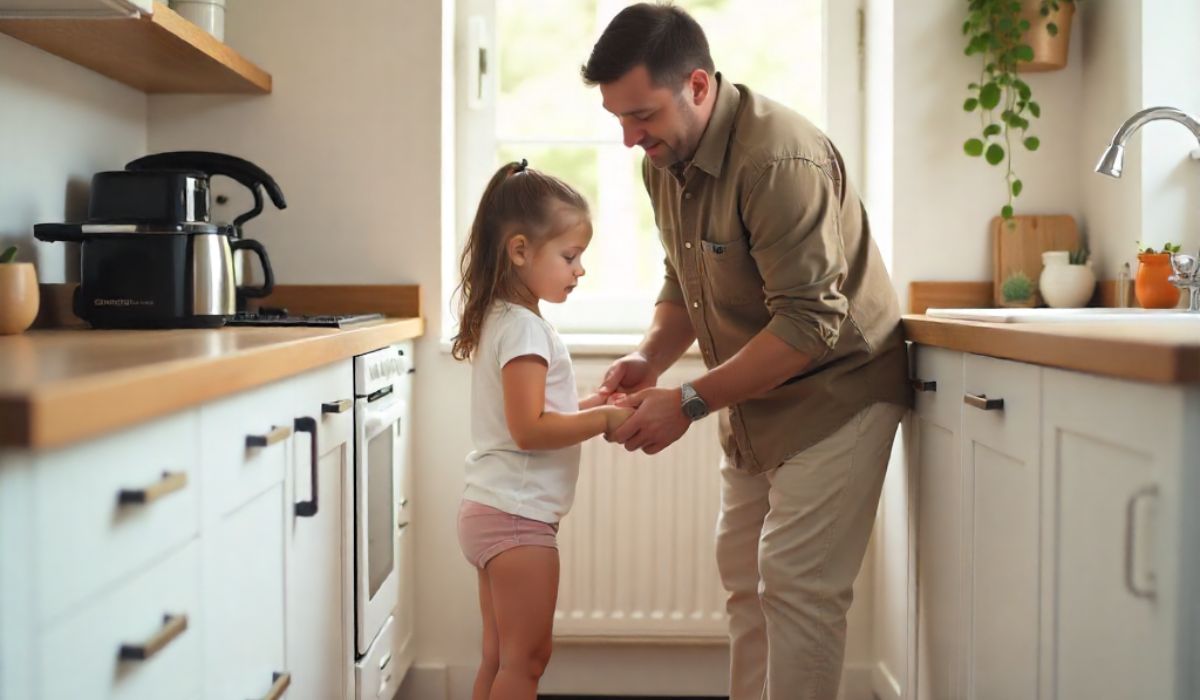
Starting the Conversation: Why It Matters
It can feel a bit awkward when you first bring up the topic of strangers, but it’s essential for your kids’ security. It’s something you do, but not something you want to do.
Children are naturally trusting, making them vulnerable to those who might wish them harm. That’s why having clear, consistent conversations about safety is vital.
These talks help children learn to assess situations and react safely, empowering them with the knowledge and confidence to protect themselves.
Building Trust and Open Communication
The foundation of any good conversation about personal safety is trust. Children need to feel comfortable talking to you about anything, including encounters that made them feel uneasy or scared.
Create a safe space where they feel heard and valued. It’s also important to listen without interrupting or judging their experiences.
Reassure them that they can always talk to you without fear of getting in trouble. Consistent communication is key. Make it a regular part of your family conversations, not a one-time lecture.
- Regular Check-ins: Make it a habit to chat with your child about their day and any interactions they had with others. This can be as simple as asking, “Did you see anyone new today?”
This regular communication helps create a relaxed atmosphere where children are more likely to share their experiences without hesitation. It also reinforces the idea that you are a safe person to talk to about any concerns they might have.
- Active Listening: Pay close attention to what your child is saying, both verbally and nonverbally. Show empathy and avoid interrupting them as they describe their experiences.
Active listening means truly hearing and understanding what your child is saying. This helps build trust and assures them that their feelings and experiences are important. Avoid dismissing their fears or minimizing their concerns.
- Validate Their Feelings: Acknowledge and validate your child’s emotions. If they express fear or uneasiness, tell them that it’s okay to feel that way.
Validating their feelings is a powerful way to show them that their emotions are valid and understood. It helps them feel safe and supported, reinforcing the idea that they can trust you with their concerns.
- Use Age-Appropriate Language: Adapt your language to your child’s level of comprehension. Avoid overwhelming them with complex information or scary details.
Tailoring your language ensures your child understands the message without being scared or confused.
Use simple, clear terms, and avoid technical jargon. For younger kids, focus on the basics; for older kids, you can go into more detail.
- Lead by Example: Model safe behaviors in your interactions with strangers and in how you respond to any potentially tricky situations.
Children learn by observing your actions. If they see you being cautious and respectful, they’re more likely to adopt those behaviors themselves.
This includes things like being aware of your surroundings, verifying identification, and setting boundaries.
Understanding “Stranger Danger” and Beyond
The term “stranger danger” has been around for a while, but it’s more complicated than it sounds. While it’s important to teach children about avoiding strangers, it’s also helpful to add the nuances of safe vs. unsafe people.
Sometimes, the person who looks the scariest is the one you need to watch out for the most. Let's delve into what this means and how to approach the idea of "stranger danger" with your kids in a way that truly helps them.
Defining “Stranger” and Identifying Potential Risks
The traditional idea of a “stranger” is someone your child doesn’t know, but the concept can be expanded.
It’s important to make the child aware of the difference between a person they know (family, friends) and a person they don’t know.
Expand this definition to people who might seem friendly but are still potentially unsafe. Teach them that anyone, regardless of appearance, could pose a risk. This ensures children are better equipped to assess risky situations.
- Focus on Actions, Not Appearances: Teach your child that it’s not always easy to tell if someone is a threat based on how they look. Emphasize that their behavior is more important.
Instead of focusing on how a person looks, emphasize the importance of observing their actions. This helps children recognize potential dangers regardless of appearances. This can include talking to them about how someone tries to trick them with gifts or favors.
- Discuss “Tricky People”: Explain that a “tricky person” might try to deceive them with gifts, promises, or by asking for help. Encourage them to trust their instincts if something feels wrong.
Describe scenarios where someone might try to deceive them with gifts, promises, or by asking for help. Teach them to recognize red flags, such as someone offering to keep a secret from their parents or telling them not to talk about what they’re doing.
- Situational Awareness: Teach your child to pay attention to their surroundings and to recognize any potential hazards. This includes observing the people around them and paying attention to their behavior.
Situational awareness is the practice of being aware of the environment, people, and potential threats around.
It helps children develop a sense of safety by noticing changes in their surroundings and responding appropriately.
- Role-Playing Scenarios: Practice various scenarios with your child, such as someone approaching them in a park or asking for directions. This helps them learn to respond effectively.
Role-playing helps children practice handling difficult situations in a safe environment. This builds their confidence and gives them the tools to respond effectively if a risky situation arises.
- Discuss Online Safety: Include online interactions in the definition of “stranger.” Teach your child about the risks of online chats, social media, and sharing personal information.
Online safety is just as important as offline safety. Explain that someone online might not be who they say they are and that they should never share personal information or meet someone they have met online in person without your permission.
Navigating Interactions with Home Delivery Workers
Home deliveries have become a major part of modern life. It’s important to teach children how to handle these interactions safely, considering the rise in online shopping and food delivery. Make sure they understand how to identify a legitimate delivery person and what steps to take when they arrive.
Teaching Safe Practices for Home Deliveries
Ensure that children understand the importance of not opening the door without checking who is there.
Teach them to look through a peephole or window. If they’re alone, they should never open the door to anyone they don’t know, even if the person claims to be a delivery worker. It’s useful to develop strategies to handle these situations, helping them feel confident.
- Verify the Identity: Teach your child to ask for identification, even from a person in uniform. Delivery workers should always carry identification.
Teach your child to verify the identity of a delivery person by asking for their identification. Explain that it’s okay to ask, and that a legitimate delivery person won't mind providing it. You can even practice this with them so they feel comfortable.
- Safe Distance: If they must interact with the delivery person, teach them to maintain a safe distance. They should speak through the closed door or stand back from the door while it is open.
Teach your child to maintain a safe distance from the delivery person. They can communicate through the closed door or step back while opening it. This physical distance protects them.
- Parental Involvement: Whenever possible, emphasize the importance of a parent or guardian being present when a delivery is made.
If you anticipate a delivery, try to be home. If you cannot be home, instruct your child to leave the package and not to answer the door.
- Use of Technology: If you have a video doorbell or security camera, show your child how to use it to identify the delivery person before opening the door.
Utilizing video doorbells or security cameras helps verify the identity of delivery personnel before opening the door. Showing your child how to use the technology empowers them to make safer choices.
- Emergency Protocol: Establish a clear emergency protocol. Teach them to call 911 if they feel threatened or if something feels wrong.
Make sure your child knows what to do in case of an emergency, and knows how to contact the police or other emergency services.
Addressing Unexpected Visitors and Unfamiliar Situations
Unexpected visitors can cause kids to be very excited, especially if they have some sort of treat. However, it’s very important to teach them about safety. Here’s a look at how to guide them through these tricky situations.
Preparing for Unfamiliar Situations
It’s vital to create a plan for unexpected situations. Discuss what to do if someone knocks on the door and claims to be a utility worker or needs assistance. Having a plan boosts their confidence and prepares them for real-world scenarios.
- Family Code Words: Develop a secret family code word that your child can use to verify a person’s identity if they claim to be sent by you.
A family code word adds a layer of safety, making it easier for a child to confirm a person’s authenticity, even in the absence of an adult.
- Practice Refusal Skills: Teach your child how to politely refuse a request from someone they do not know. This could involve saying “No, thank you,” or “I need to ask my parents first.”
Knowing how to say no, confidently, will protect a child from peer pressure, and even from an unwanted situation with a stranger.
- Safe Places in the Home: Identify safe places in your home where your child can go if they feel threatened. This could be a locked room or a neighbor’s house.
Creating safe places for children helps them understand where they can go if they need help, or feel as though they are in danger.
- Emergency Contacts: Ensure your child knows important phone numbers, including your contact information, a trusted neighbor, and 911.
Knowing phone numbers allows a child to reach out for assistance quickly when they are not sure what to do.
- Reviewing Safety Plans: Regularly review safety plans with your child. This will reinforce their understanding and ensure they can respond to situations appropriately.
Reviewing safety plans ensures that your child is prepared to deal with unusual circumstances that may happen.
Role-Playing and Practice: Making Safety Real
Simply talking about safety is only part of the process. Actual practice is just as vital. Through role-playing, children can develop the skills to handle risky situations, building their confidence and making the knowledge more memorable.
Creating Scenarios and Practicing Responses
Role-playing gives children a safe space to practice responses. You can create various scenarios, from someone approaching them in the park to someone asking for help. Guide them through different responses, from saying “no” to finding help.
- The “Lost Puppy” Scenario: A stranger approaches your child and asks for help finding a lost puppy, trying to lure them away.
Discuss the importance of not going anywhere with strangers. Practice refusing politely and asking a trusted adult for help.
- The “Friendly Neighbor” Scenario: A neighbor asks your child to come over to their house for a treat while you are away.
Discuss the importance of saying no and waiting for a parent to be present. Emphasize that it is okay to decline the invitation.
- The “Delivery Person” Scenario: A delivery person arrives while your child is home alone and asks for the package to be left somewhere.
Review the steps to take, including verifying the worker’s identification and not opening the door without asking permission.
- The “Offering Help” Scenario: Someone stops and asks for directions to a local landmark.
Talk about the importance of helping and the value of having good manners. Explain the limits of what a child can do safely.
Fostering Ongoing Safety Conversations
Safety is not a one-time lesson. It’s an ongoing discussion. Keeping the conversations open and honest will empower your child to handle tricky situations.
Making Safety a Regular Topic
Regularly discussing safety keeps it at the front of your child’s mind. It’s about creating an atmosphere where they feel comfortable talking about their experiences, and they know you will listen. Integrate these conversations into your daily routine.
- Check-in at the End of the Day: Ask about their day and mention any interactions with people they may have had. It can be as simple as, “Did you talk to anyone new today?”
This simple act fosters communication and creates opportunities to discuss safety-related topics that might have arisen.
- Discuss Media Content: Watching movies, TV shows, and books that feature safety-related themes. It can be a great starting point for discussion.
Media can provide engaging conversation starters about real-life situations. The key is to discuss the story’s events to make the lesson stick.
- Review Safety Rules: Review safety rules at least once a month. This can include practicing what to do in different situations, like what to do if they’re approached by a stranger.
This reinforces the essential elements, ensuring that your child is prepared for various circumstances.
- Create a Code Word: Create a family code word that your child can use to verify the identity of a person who says they’re from you.
This will add a layer of safety, making it easier for a child to confirm a person’s identity.
- Encourage Questions: Encourage your child to ask questions and express any concerns they might have, to foster open discussion.
By fostering open discussion, you are building a safe space in which the child feels as though they can reach out at any time.
FAQ Of Talking to Kids About Strangers, Visitors, and Workers
Question: At what age should I start talking about safety with my child?
Answer: It’s never too early. Begin with simple concepts around ages 3-4, and expand on them as your child grows.
How can I make these conversations age-appropriate?
Use simple language for younger children, focusing on “safe” and “unsafe” people. As they get older, introduce more complex topics.
What should I do if my child shares a concerning experience?
Listen without judgment, validate their feelings, and reassure them they did the right thing by telling you. Take appropriate steps to ensure their safety and well-being.
How often should we discuss safety topics?
Answer: Make it an ongoing part of your conversations. Regularly review the topic, and always make it a safe space.
What if my child is scared or anxious after these conversations?
Reassure them that you are there for them and that you’ll work together to keep them safe. Provide extra comfort and talk about how to deal with feelings of fear.
Final Thoughts
Teaching kids about how to handle interactions with strangers, visitors, and service workers is an ongoing process that requires communication, consistency, and understanding.
Start by building trust, so your child feels comfortable sharing their experiences. Define the concept of a stranger beyond the classic definition, and discuss the importance of recognizing potentially unsafe behaviors.
Teach them safe practices for home deliveries and provide a plan for unexpected visitors. Role-playing is also very important, allowing you to simulate situations and build your child’s confidence.
Remember, these lessons will give your children the skills and courage they need to protect themselves.
By being proactive and consistent, you are giving your child a huge gift: the ability to make sound choices, stay safe, and have confidence, even in tricky situations. Keep the conversation open. Regularly check in, and show them you will always be there for them.